
AUGUST ‘26 ART REVIEWS
BRUNA ESPOSITO: IN LIGHT OF FACTS and REMO SALVADORI; BE HERE NOW at Magazzino Italian Art, Cold Spring, NY, through Feb. 1, ‘27.
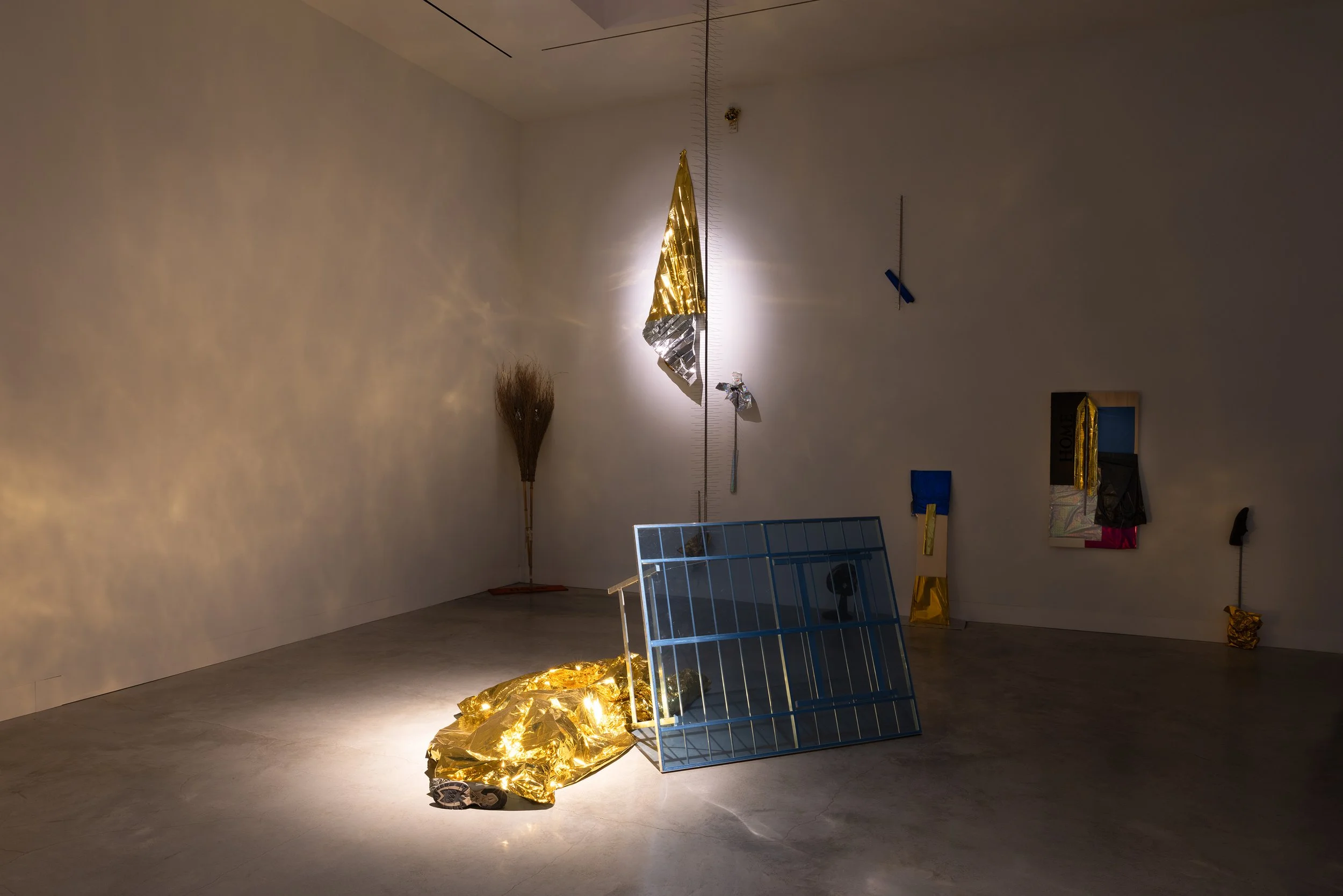
Installation view, Bruna Esposito: In Light of Facts, 2026; photo by Marco Anelli and Tommaso Sacconi, courtesy Magazzino Italian Art
With darkened spaces enlivened here and there by spotlit glittery gold mylar rescue blankets on the walls and floor, and a gathering of small flickering red electric votive candles on the floor in one area of the gallery, Bruna Esposito creates an evocative dreamlike atmosphere for this exhibition, In Light of Facts. The Rome-based artist, known for conceptual works using mostly found materials, addresses in this exhibition issues of nationalism, migration, immigration, ostracism and homelessness. Organized by Magazzino director Nicola Lucchi, the show is arranged in two sections that gracefully merge. The first area visitors enter, Inconveniente (Inconvenience), a version of an installation Esposito first presented in a gallery in Italy in 2014, features several wall-hung and freestanding, translucent blue plexiglas market tables trimmed with rows of sharp bird spikes.
In Esposito’s rarefied visual language, a market table suggests the sometimes precarious street market economies that profoundly affect the lives of migrants, while in some cases the visual quality of the material turns them into something more poetic (for example, the table in Cielo suggests a window onto a blue sky). The foreboding metal bird spikes allude to many migrants’ inability to alight, to find solace anywhere, or to find a place they could call home. The eerie, emotionally wrought, multipart title work, Inconveniente, shows one of the market tables placed on its side. A large, rumpled mound of a gold rescue blanket on the floor next to the table has a protruding shoe at one end that sparks a startling revelation that, apparently, this figure, wrapped head-to-toe in the gold hypothermia material is caught in a dire life-or-death situation.
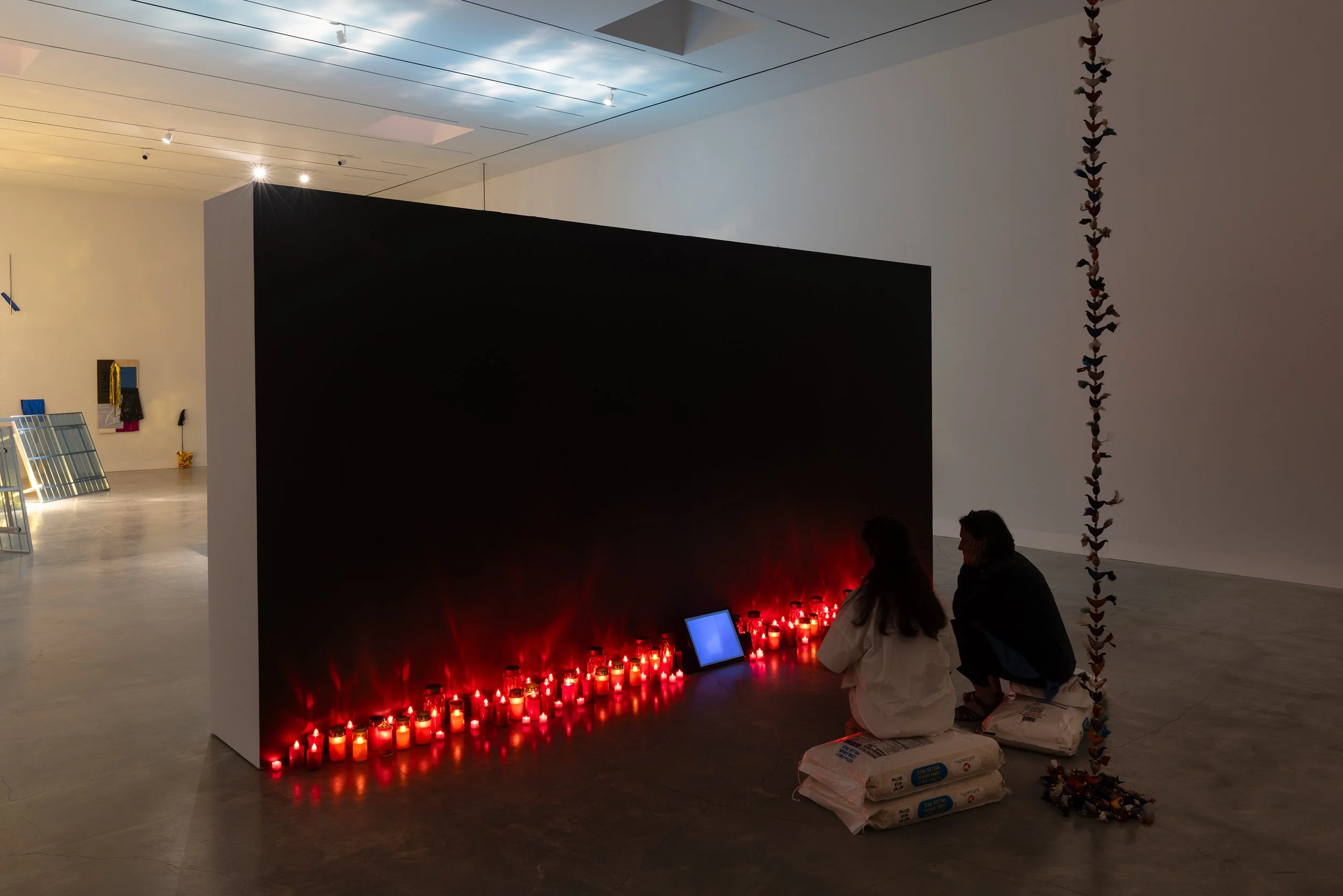
Bruna Esposito, Oltremare (sotto terra vulnerabili), 2006-2011, loop video with sound, monitor, bags of rice, cemetery candles, copper, silk. Courtesy of Wizard Gallery, Milan; photo by Marco Anelli and Tommaso Sacconi, courtesy Magazzino Italian Art
The second section of the exhibition contains the installation Oltremare (sotto terra vulnerabili), Overseas (vulnerable underground), 2006–2011, never-before shown in the U.S. The presentation centers on a small video monitor placed on the floor before a large dark wall. The video loop shows a flag of some indeterminate nation slowly immersed and finally disappearing beneath a deep blue sea. Clusters of red votive candles on either side of the video monitor reference the memorial tributes to immigrants that have risked or lost their lives traversing the Mediterranean. In front of the wall, large sacks of rice can serve as seats, a respite for weary museumgoers; and suspended from the ceiling, a strand of small silk birds handcrafted in Thailand adds a hopeful note to the installation. With a softly undulating electronic music score adding to the hypnotic tone of the exhibition, Esposito manages to offer a quiet meditation on one of the most disturbing and consequential social-political challenges of our time.
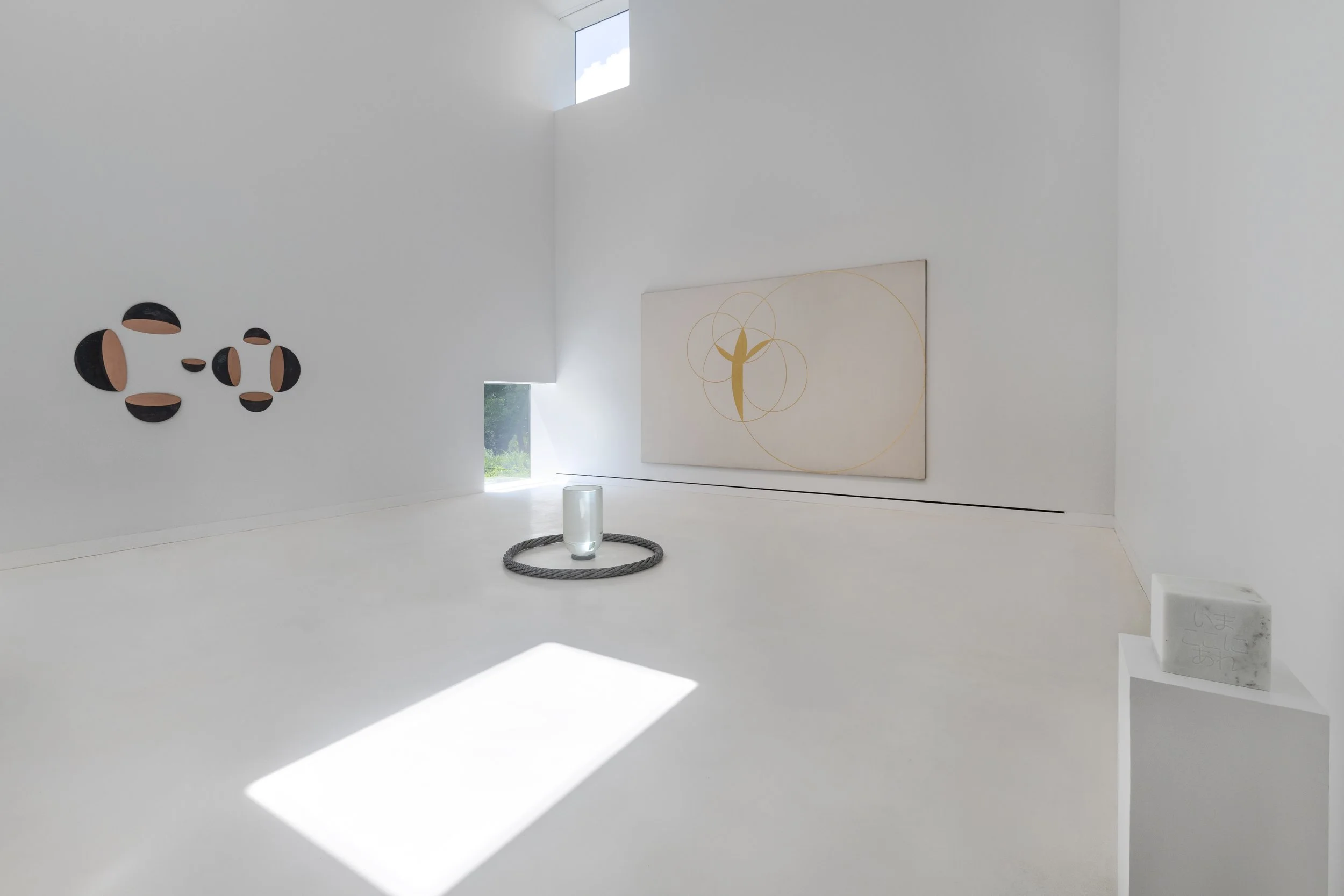
Installation view, Remo Salvadori: Be Here Now,.2026; photo by Marco Anelli and Tommaso Sacconi, courtesy Magazzino Italian Art.
Along with an ongoing survey of works by Alighiero Boetti, Tutto Boetti 1966–1993, Magazzino is also presenting this season a gallery devoted to Remo Salvadori (1947-2026). Remo Salvadori: Be Here Now is a personal tribute by Magazzino founders Nancy Olnick and Giorgio Spanu, who were friends of the artist and hosted an exhibition of his works in 2017. The current exhibition serves as a fine encapsulated survey containing one mural-size painting with gold leaf, a study of the golden ratio, and sculptural works in marble, various metals and glass that correspond to Arte Povera but encompass an idiosyncratic and unique cosmology. — David Ebony
NAYLAND BLAKE: “HAUNT”: BEING THE FOLLY OF ONE VICTORYA SPECTRE at ART OMI, Ghent N.Y., on view in the Newmark Gallery through January 10, ‘ 27. The exhibition in the Sculpture & Architecture Park is on view until the fall of ‘30.

Nayland Blake Welcome Center, 2026. Courtesy of the artist; and Matthew Marks Gallery. Image courtesy of Art Omi. Ph: Olympia Shannon.
Nayland Blake is an adored sculptor, teacher, curator, theoretician, essayist, and museum-caliber artist. It is fair to ask why they are not better known beyond the art world. Blake's work engages even viewers with little contemporary art experience through its profound playfulness and generosity. Their years as a beloved professor at Bard College have produced scores of devoted former students, their influence now dotting every corner of the Hudson Valley art scene. Sara O'Keeffe has made Blake's exhibition a triumphant final project at Art Omi before departing for Philadelphia's ICA.
If fuzzy boundaries between deeply researched truths and obvious fictions unsettle you, beware. Blake and O'Keeffe turn the entire exhibition into a game of Two Truths and a Lie, beginning with the introductory wall text. Museum labels remain among the most trusted forms of public communication, and the exhibition exploits that faith. The text calmly informs visitors that Blake died in 2025 and was reborn as a fictional character, launching a sequence of implausible truths, convincing lies, and historical anecdotes so bizarre they seem invented—except many of them are not.

Nayland Blake “Haunt”:Being the Folly of One Victorya Spectre. Ph: Brandon Schulman
Shaped like the folksy natural history signs found at rural visitor centers, the interpretive panels are immediately inviting while hinting that something is deliciously amiss. One begins: "If you pretend to be dead, can you pretend to be a ghost?" Mounted above a photograph of Blake in their leather-daddy persona and beside an image of an opossum—nature's master of feigned death—it establishes the exhibition's delight in masquerade.
Among the first stories is the entirely true history of eighteenth-century English landowners building ornamental hermitages and hiring men to inhabit them in silence for years, becoming living landscape features for aristocratic guests. Blake has constructed their own hermitage, Haunt, in a remote corner of the sculpture park, supposedly inhabited by Victorya Spectre, the artist's alter ego. Resembling an abandoned amusement park crossed with an English folly, it invites visitors to follow whimsical wayfinding signs and ring bells in hopes of glimpsing either Victorya—or the resident hermit.
Blake's essays and interviews have recently been collected in My Studio Is a Dungeon Is the Studio: Writings and Interviews, 1983–2024, but one need not read a page of theory to grasp the exhibition's ideas. Simply wandering the grounds of Art Omi in search of a possibly imaginary hermit may be enough to awaken one's own desire for transgression—and reveal it as a path toward strangely divine, delightfully decadent wisdom. —Bill Arning
REGINALD MADISON NEW SLANT OLD STORY at September, Kinderhook, NY through September 27, ‘26.
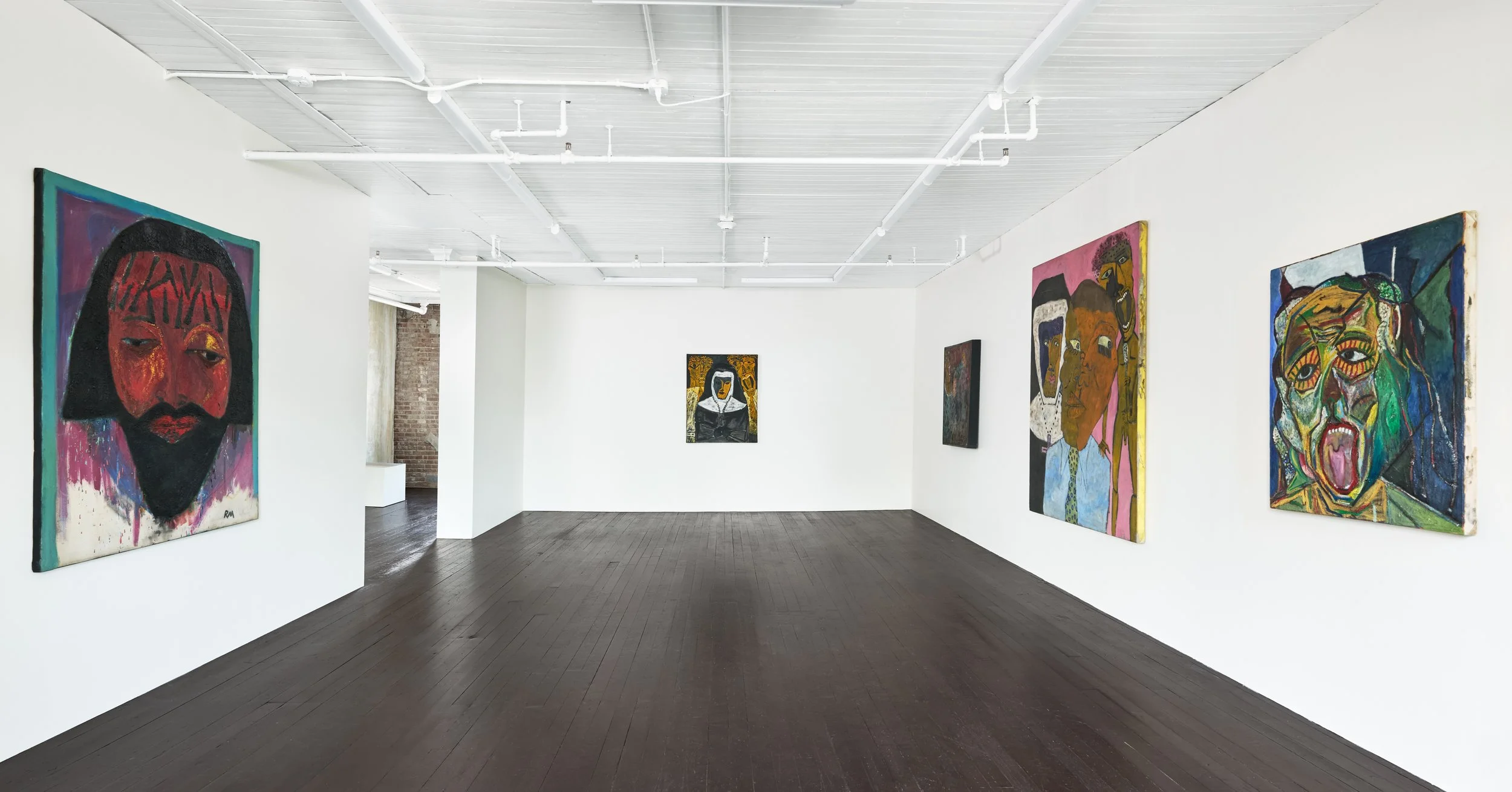
Installation view of Reginald Madison New Slant Old Story at September. Photo Pearl Khosrova.
For those of us who attended Catholic School, we share a certain understanding with respect to its psychological ambiance: grace riddled with angst. Reginald Madison (1941 – 2026) brings us into the curious realms of the Catholic experience in New Slant Old Story, his third solo show at September. Featuring paintings on canvas, panel and paper (many exhibited for the first time), the exhibition is an expressionist feast filled with religious overtones and laced with a voodoo edge. Madison was born in the South Side of Chicago and started making art as a teenager after discovering a box of discarded paints. Described as a “self-taught” artist, Madison was surrounded by jazz and other musical influences during his youth, and this had a lasting impression on his experimental artistic style.
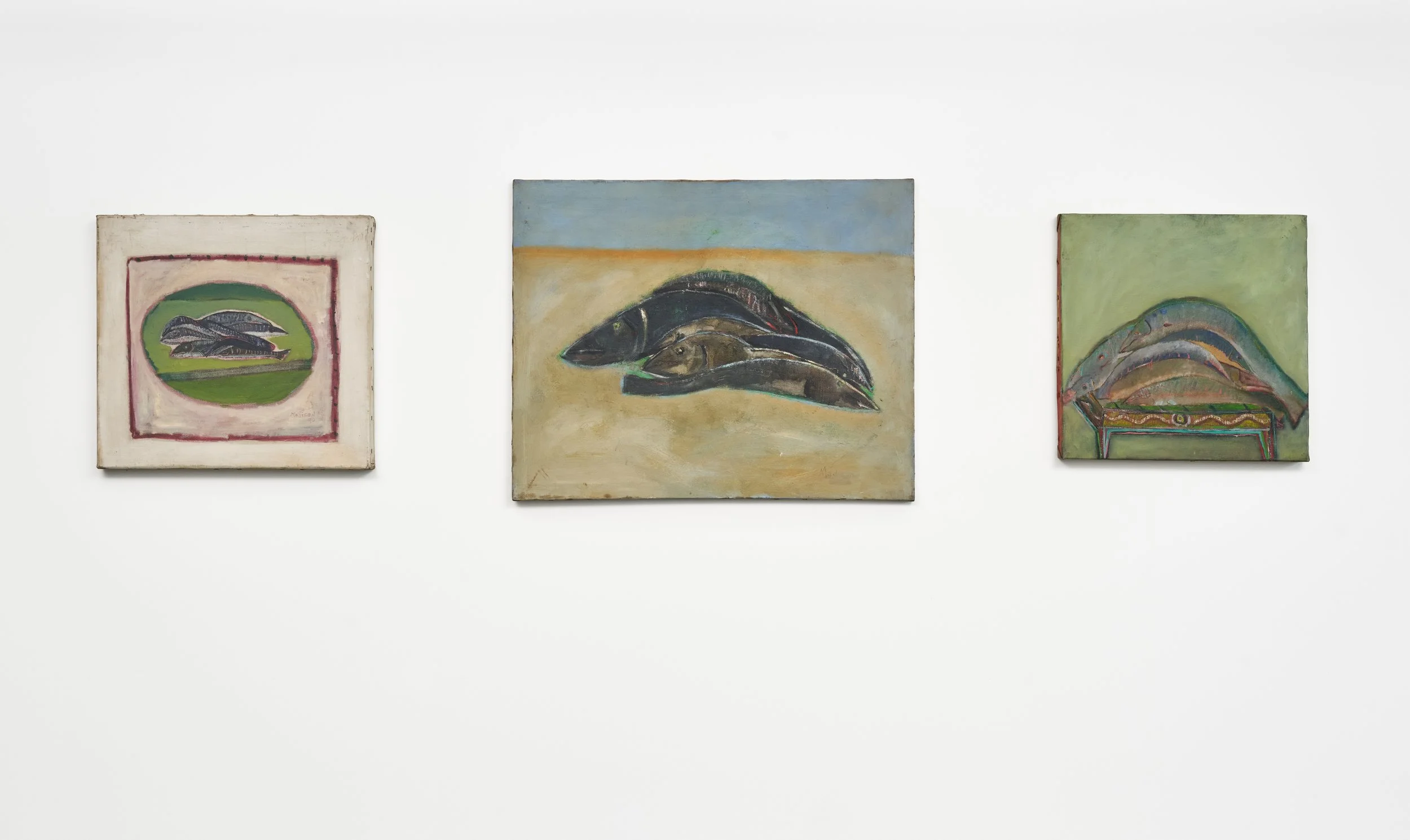
Installation view of Reginald Madison New Slant Old Story at September. Photo Pearl Khosrova.
The iconography associated with Catholicism is ripe for reinterpretation, and Madison employs some of the defining symbolism of this doctrine to illuminate his personal encounters with religiosity and spirituality. In The Crowning Of The Thorns (2001), for example, we behold a crimson-hued portrait of Jesus with his forehead covered in black spikes. His somber face fills the frame as the rouge color around the top fades into white at the bottom, giving the impression of an unfinished work. Crusifixsion (egyptian jesus) [sic] (2012) is a petite painting with an “outsider art” appeal that presents the Son of Man hanging on an orange-tinged cross against an ominous noir background. Several works feature a pensive nun as a primary leitmotif, and Sister Veronic Marie (1988) and Choir Boys (1992) are vibrant portrayals of this. The Dance Lesson (1980) is a three-part painting on salvaged wood panels that includes nuns cavorting with nude figures and devil-like creatures while angels around the edges anchor this wild scene.
A series of fish paintings bring our attention to the biblical account of Christ and his magical ability to feed a multitude with just five loaves of bread and two fish, including Foul fish (1990) and Fishscape (1990), the later featuring the acclaimed duo laying together. The titular New Slant Old Story (1992) is the masterpiece of this show and includes three figures—a nun, a schoolboy, and a naked fellow—against a pink background in a tableau that appears “mental” in its beautiful bizarreness. When I consider the essential memories of my Catholic school years—the looming fear of God, the rage of the nuns, the image of a tortured Christ—I feel a kinship with Madison. His brave painterly explorations into the complexities surrounding religion gives us both a new slant on the old story, and a new story on the old slant. –Taliesin Thomas
UPSTATE PHOTOGRAPHY BIENNIAL at CPW, Kingston, NY through September 13, ‘26.
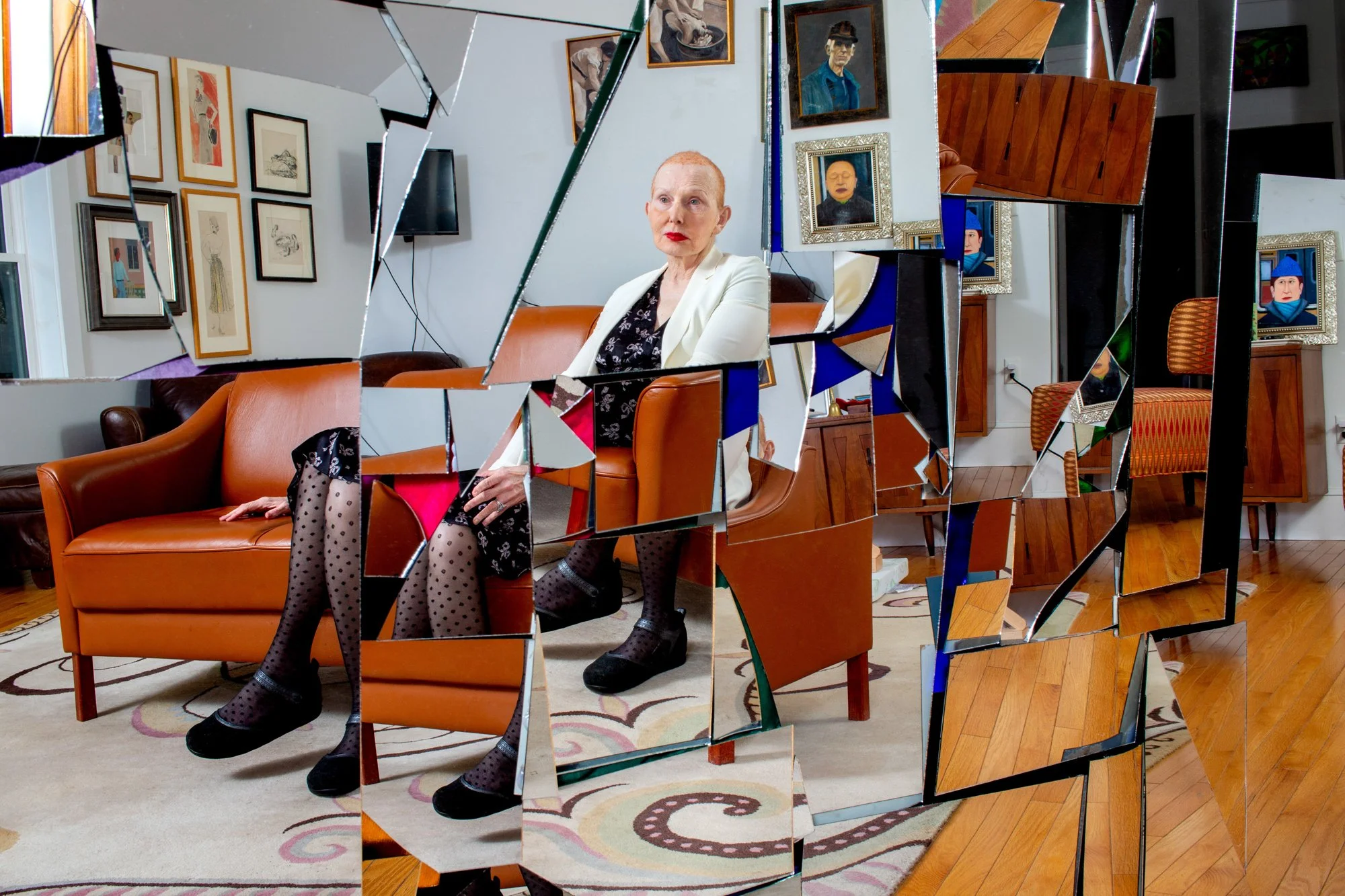
Seth David Rubin, Portrait of Laura (2024) part of the Upstate Photography Biennial at CPW. Photo courtesy CPW.
The brilliant Susan Sontag wrote “a photograph is a secret of a secret,” and her comment aptly reflects the intimate ethos and existential complexity of the inaugural Upstate Photography Biennial at CPW. Founded in 1977 as a community center by photographers for photographers, CPW remains a stronghold for the celebration of photography in all its diversity. Organized by CPW curators Marina Chao and Adam Giles Ryan, this new landmark biennial features thirty-nine artists (drawn in part through an open call) whose engagement with photography highlights the dynamic talent in Upstate New York. During the opening in late May, I mingled with the co-curators and CPW Executive Director Brian Wallis, who spoke passionately about how the community is defining itself and what it is to be a part of the region.
Using traditional and contemporary photographic processes such as tintypes, pinhole cameras and cyanotypes, this show takes us on an artistic journey that both characterizes our era and resists classification. Corrine Botz’s Cosmetic Nurse (2019), for example, is the image of a breast-pump on a reflective glass table with random objects including a small toy gun, leaving us to question the scene. Allison DeBritz’s I Feel Everything (2025) is a collaged female from behind and part of a commanding installation of reconfigured images of women’s bodies comprised of sliced, ripped and layered vinyl. Seth David Rubin’s photos from his “Placements” series are created by elaborate mirrored structures that he constructs on-site, and Portrait of Laura (2024) is an image of the graceful sitter in Rubin’s splintered environment.
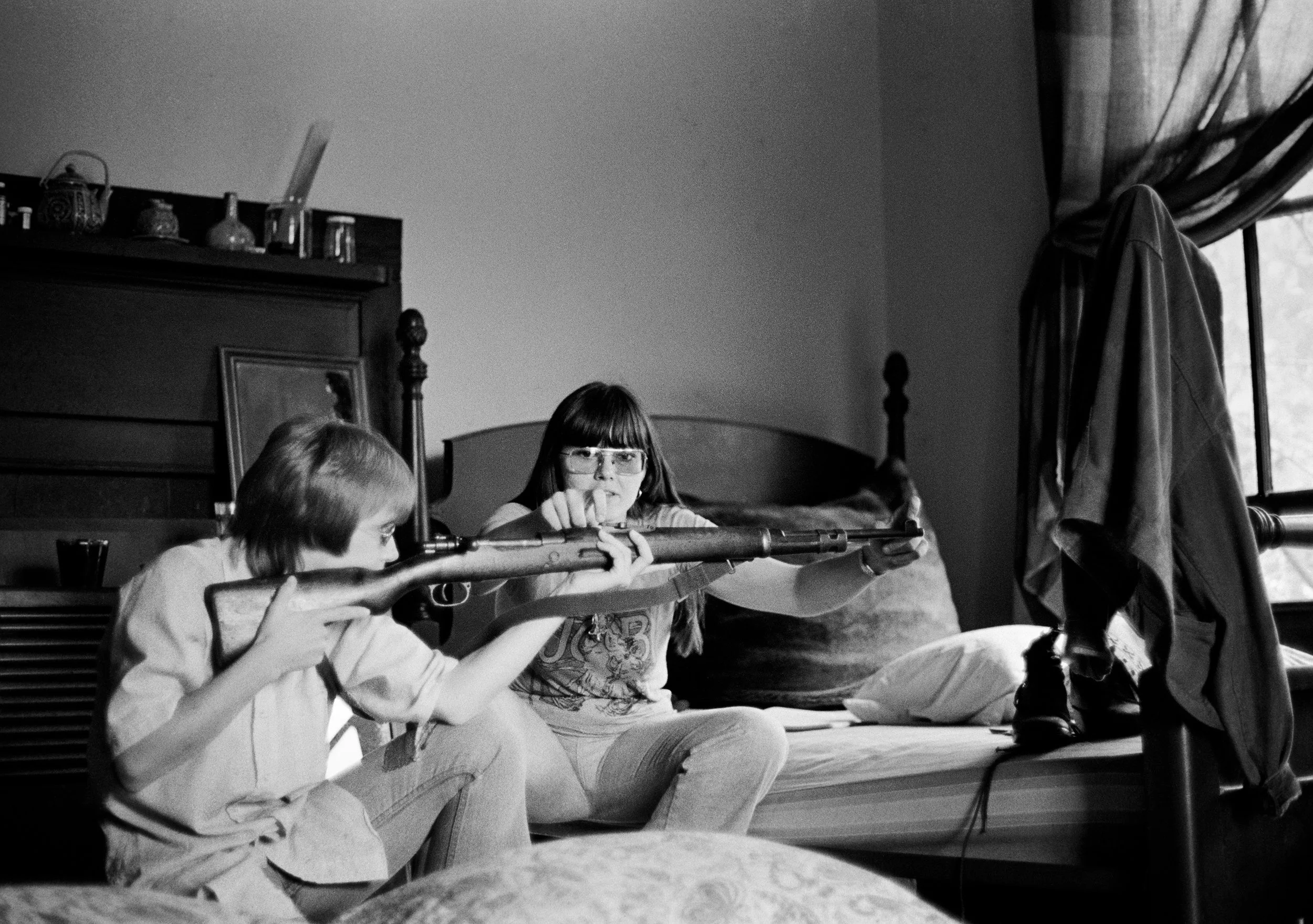
Among the most iconic photographs are The Revolution Will Not Be Televised (1974), featuring retro visions of a lesbian feminist collective as they handle firearms, by Morgan Gwenwald, and Red Shorts stay ready, New Orleans, Louisiana (2021) by Sasha Phyars-Burgess. In this work, a fierce female boxer throws a sturdy punch into the Everlast bag above her, and the photo is one in a group of poignant images that trace the history of sugarcane cultivation in relation to the transatlantic slave trade. A series of provocative black and white works by Meryl Meisler provide a peek into the eccentric nightlife of drag communities around New York, while Lyle Ashton Harris’ luscious black and white photos of nude friends and lovers lying in bed are a tender representation of queer life during the 1980s. A treasure chest of secrets within secrets, the Upstate Photography Biennial is an exquisite reflection of community power and personal autonomy. –Taliesin Thomas
PARTY IN HELL RuthAnn, Catskill, NY through September 12, ‘26.
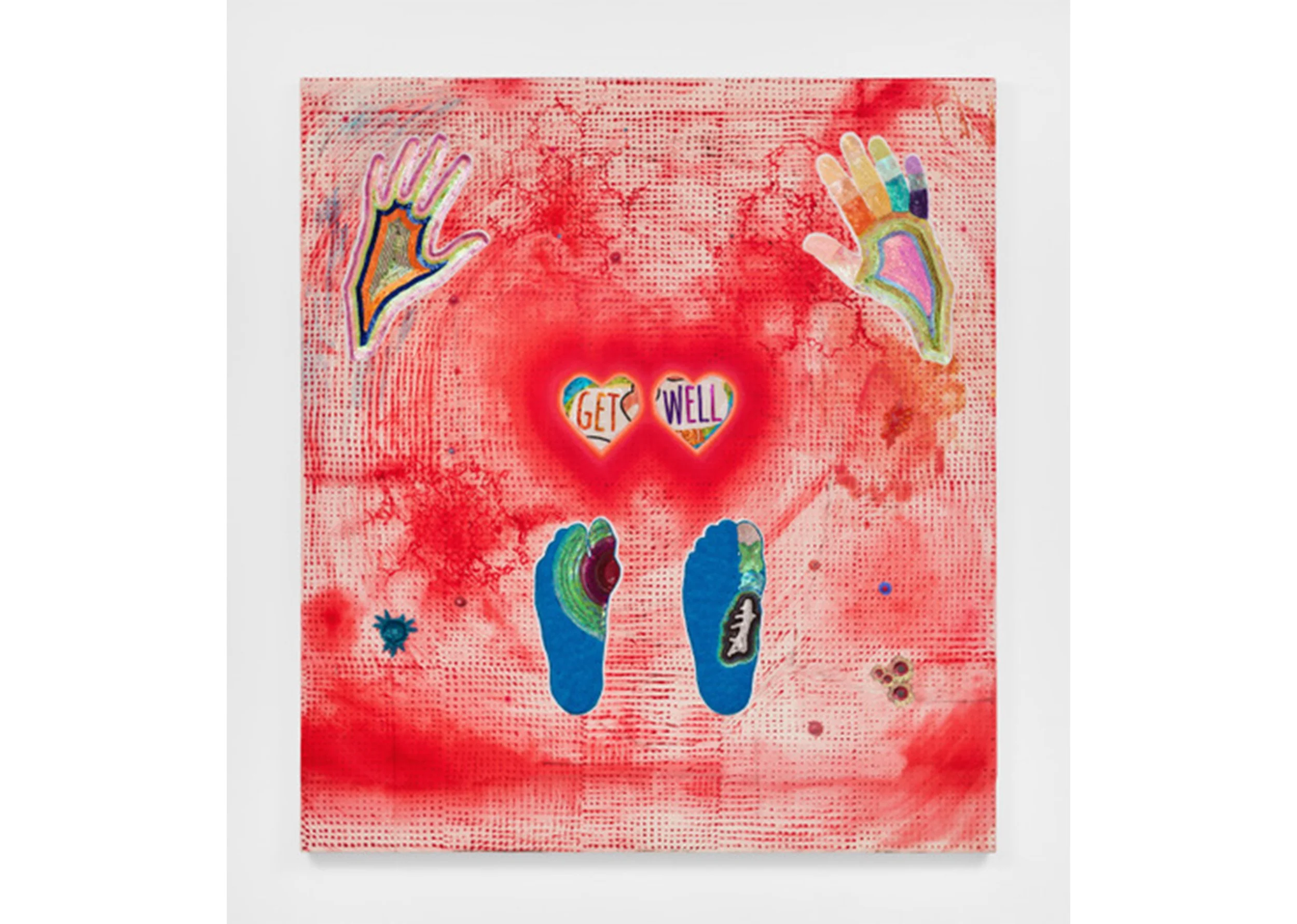
Get Well, 2024, by Pol Morton. Courtesy RuthAnn Gallery.
Reading The New York Times in the morning, it's hard not to think about death. Our finite life spans define our time on earth, and the knowledge that, in eighty years or so, we will all be returned to the soil makes the daily assaults on human dignity emanating from the White House seem, if not insignificant, at least temporary.
Party in Hell, a seven-artist exhibition at RuthAnn, takes as its theme the ways contemplating our inevitable mortality—and the devotional practices that accompany it, from goddess worship to magical thinking—can help us continue living despite everything.
It is an ambitious curatorial premise, and Party in Hell offers moments of genuine transcendence. In person, it is also considerably more lighthearted than its title suggests. All the interesting people seem to have gone downstairs, where the Devil hosts far livelier gatherings than anything imaginable in an eternity of dull bliss. Why not party in hell?
The artists span five decades, from their thirties to their eighties, allowing for a wide range of responses to the existential dilemma. Nancy Davidson, the exhibition's only sculptor, presents a glowing resin walking stick. Based on James Joyce's "hecatesstick" in Ulysses—Leopold Bloom's ash walking stick—the work invokes Hecate, a guardian goddess.
Painting dominates the exhibition. Brian Wood's delightful Heka (2023) references the ancient Egyptian embodiment of magical power. It is an unusually playful work from an artist better known for brooding paintings that peer into inky spatial voids. Hung nearby, Elena Sisto's intimate black-and-white paintings transform comic-strip figures such as Olive Oyl and Sleeping Beauty into stand-ins for our wounded selves, quietly awaiting healing and rescue.
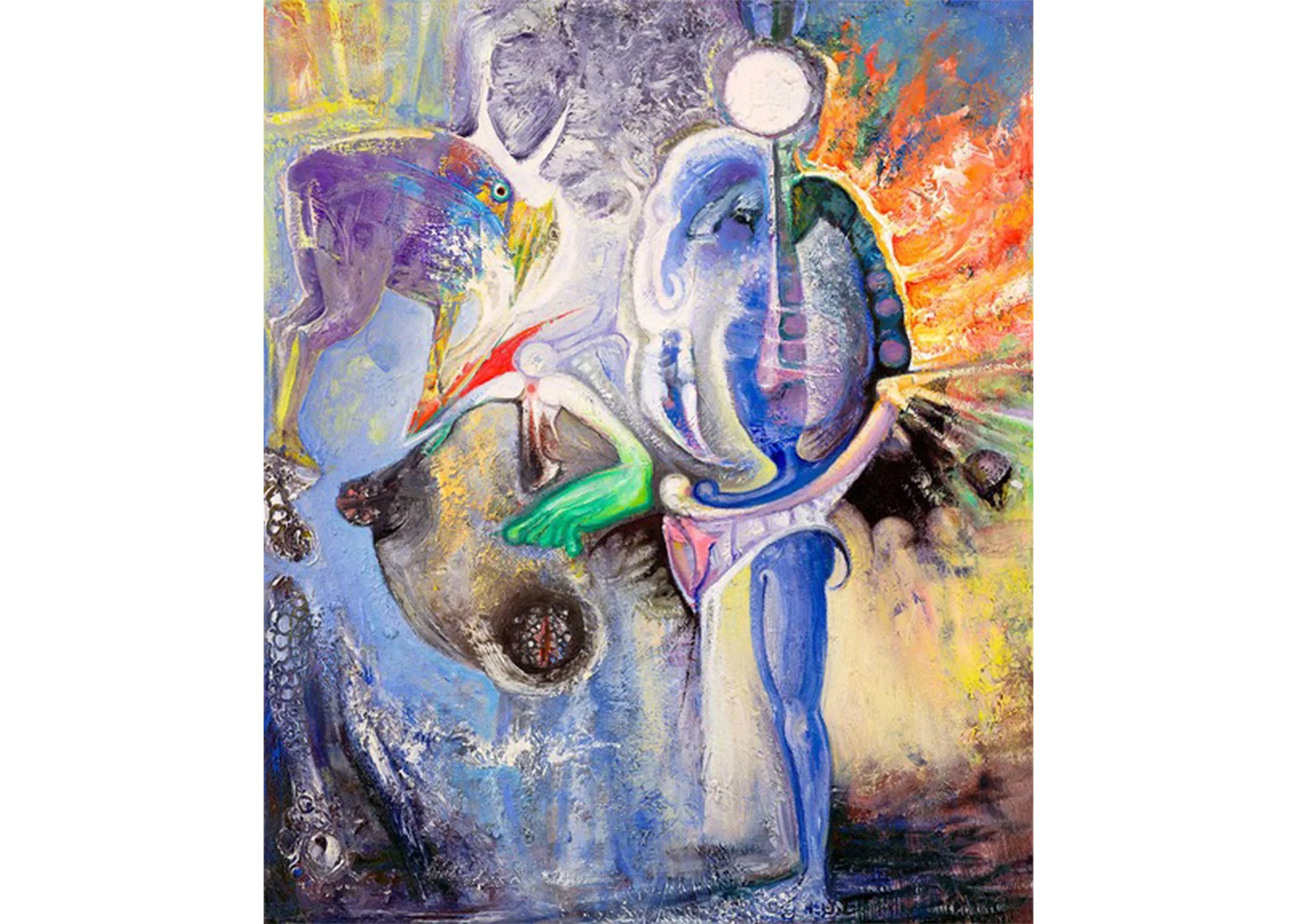
Heka, 2024 by Brian Wood. Courtesy RuthAnn Gallery.
Perhaps the exhibition's purest expression of healing through magic is Pol Morten’s Get Well, in which hands, feet, and hearts function as contemporary milagros, petitioning for relief after the foot surgery that confined the artist to a wheelchair in 2022. These body parts reflect the lingering sensations of recovery. The work gently reminds us that when the body is in pain, we have little choice but to inhabit the present moment and accept solace wherever it appears.
As the deeply community-minded RuthAnn has done with many exhibitions, a portion of sales will benefit The Columbia County Sanctuary Movement, a local nonprofit. The gesture reinforces the show's central proposition: contemplation alone is not enough. Whether through art, ritual, myth, or mutual aid, surviving difficult times requires multiple strategies—different ways of getting safely from tonight to tomorrow.— Bill Arning