
JULY ‘26 ART REVIEWS
SPATIAL POEMS at MASS MoCA, North Adams, Mass., through April 4, ‘27.
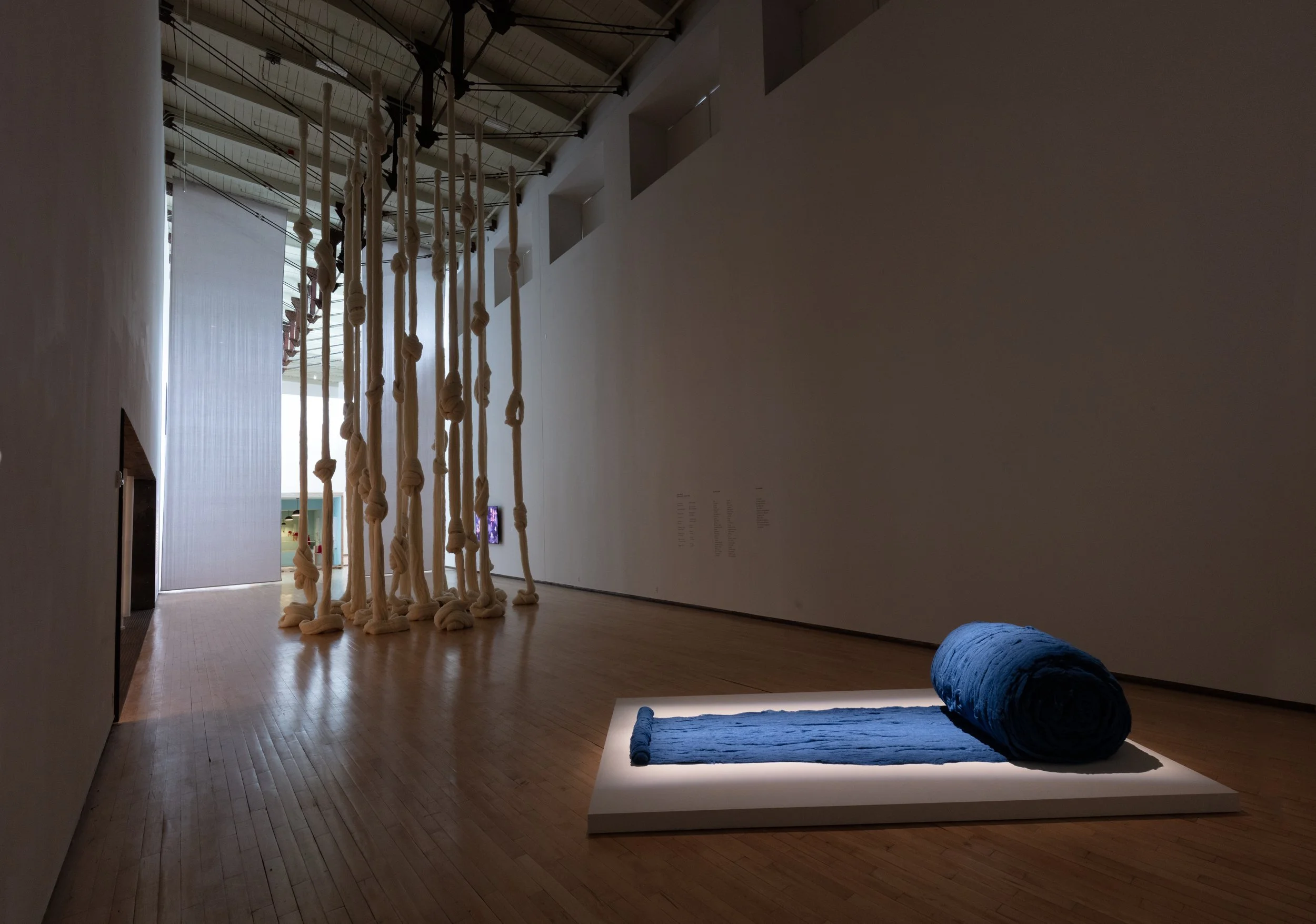
Installation view, works by Cecilia Vicuña in Spatial Poems, 2026, MassMoCA; Photo: Jon Verney.
The press release for MASS MoCA’s recently opened, sumptuous exhibition, Spatial Poems, refers to the show as a communal exhibition in three concurrent parts featuring works by artists Cecilia Vicuña, Lola Ayisha Ogbara, and Sam Frésquez. The principal organizer, Marissa Del Toro, invited two guest curators, Ninabah Reid Winton and Jamillah Hinson, to contribute to the show separate solo exhibitions that would augment and enrich the theme. Spatial Poems offers many ways to think about space with regard to an individual’s movements through space and our emotional relationships with it. On view is a wide variety of two-dimensional and three-dimensional works—from sculptures and installations to painting, drawing and video. Del Toro focused on Cecilia Vicuña: union of three, a handsome survey of works by the Chilean-born artist, writer and activist who was awarded the Golden Lion for lifetime achievement at the Venice Biennale in 2022.
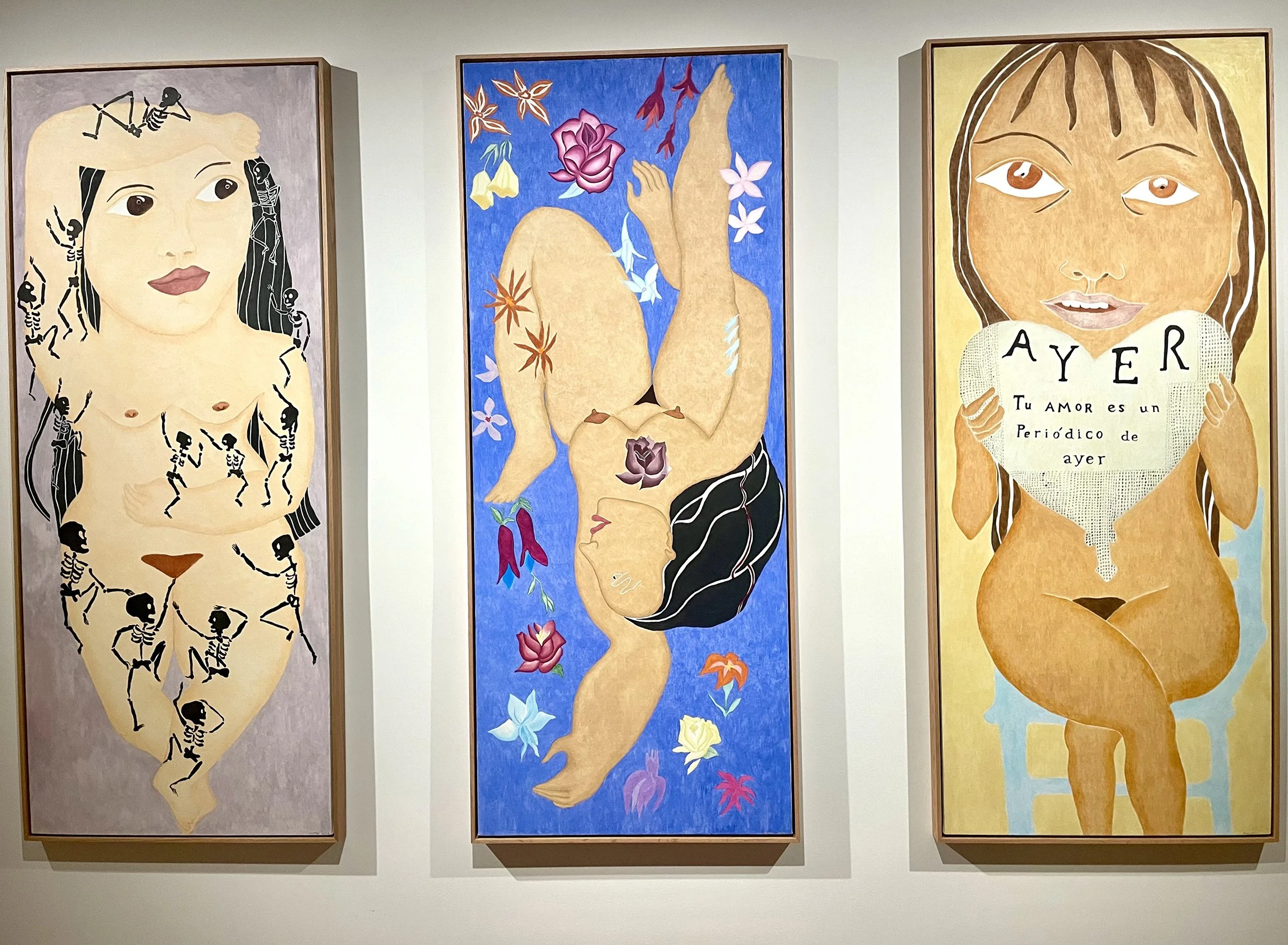
Three oil on canvas paintings by Cecilia Vicuña in Spatial Poems, (l-r) Twist del esqueleto, 1978/2024; La Habana, 1978/2024; Periódico de Ayer, 1978/2024; Photo: David Ebony.
For viewers unfamiliar with this important artist’s work, the presentation serves as a concise and graceful introduction. The show opens with Vicuña’s monumental textile works, Quipu Desaparecido 2 / Disappeared Quipu 2 (2018) and Balsa Snake Raft to Escape the Flood (2017), which invite viewers to meander in an around the towering braidlike forms and myriad assemblage sculptures suspended from the ceiling. Also on view are selections of paintings, smaller sculptures, photos and video works that explore Vicuña’s more intimate poetic and political aims.
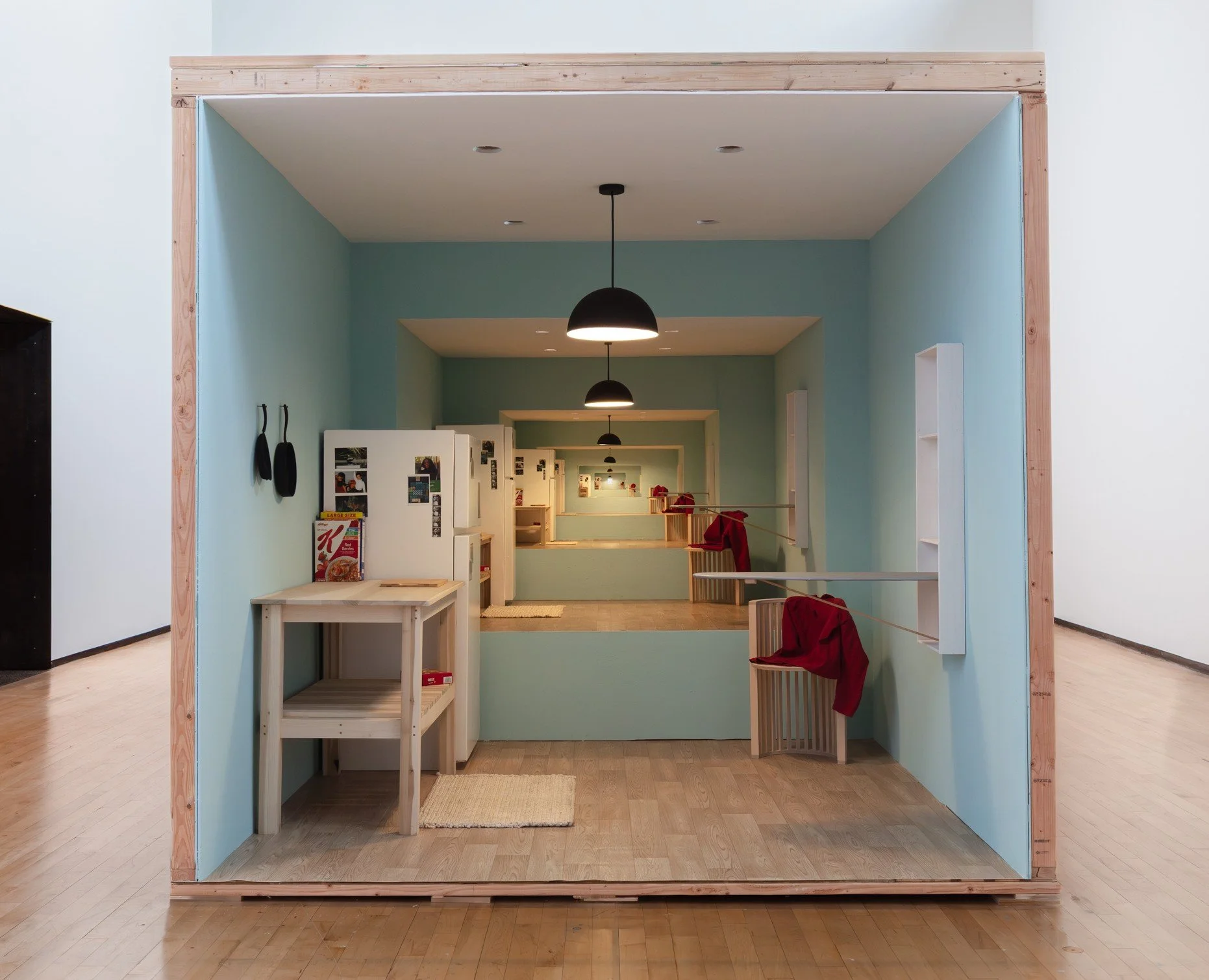
Sam Frésquez, *, 2026, in Spatial Poems, MassMoCA; Photo: Jon Verney.
Filling one large gallery, Sam Frésquez: * (pronounced asterisk), curated by Winton, offers a more pictorial and quizzical way of thinking about space in a singular sculpture that is a hyper-realist, quasi-surrealist, technical tour-de-force. Here, the Arizona-born artist has constructed six “nesting kitchens,” beginning with a life-sized kitchen and a sequence of six increasingly miniaturized versions of the exact same space with meticulously rendered tables, refrigerators, and even frying pans hanging on the walls. From the far end of the wooden structure, Sam Frésquez provides an oculus through which one can experience an equally astonishing traversal of time and space, from a miniature kitchen to life-size environment.
The third component of Spatial Poems, Lola Ayisha Ogbara: Scars Insist on Being Remembered, curated by Hinson in collaboration with Del Toro, presents ceramic sculptures, installations and video works that explore what might be termed an elegiac space. The Chicago-based, Nigerian- American artist presents areas of contemplation, and objects of meditation and mourning, including a site-specific installation and sound piece, commissioned by MASS MoCA. —David Ebony
BETTY PARSONS: AN EXPANDED WORLD, at Hessel Museum of Art, CCS Bard, Annandale-on-Hudson, N.Y., through Oct. 18, ‘26.
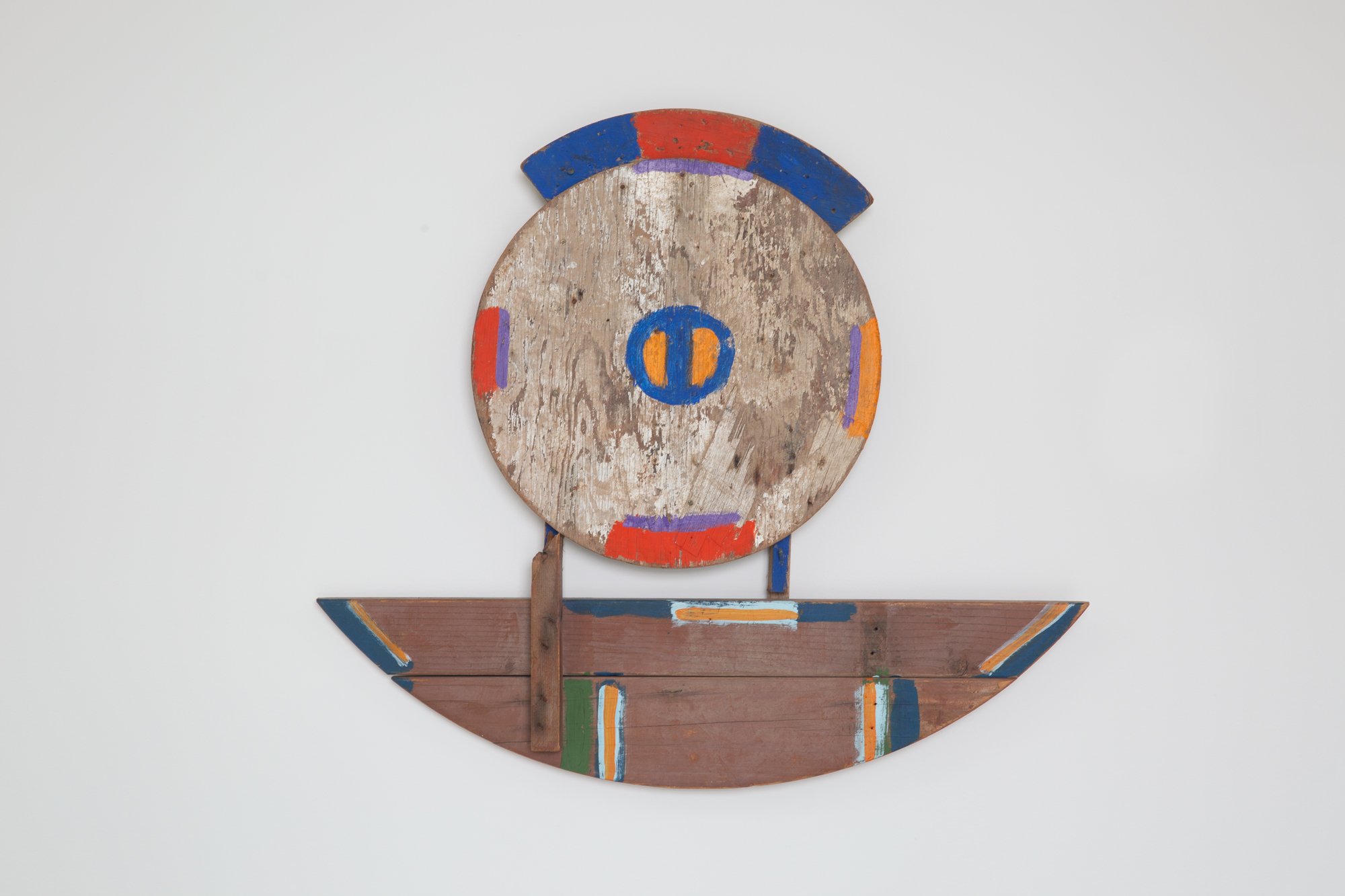
Betty Parsons, Moon, 1982, acrylic on weathered wood, 31 2/8 x 35 1/2 x 2 6/8 in (79.38 x 90.17x 6.99 cm); Courtesy Alexander Gray Associates, New York; © 2025 Betty Parsons and William P. Rayner Foundation. Photo courtesy Hessel Museum, CCS Bard College.
Betty Parsons: An Expanded World is a major retrospective that presents the prominent art dealer and admitted Sunday painter as a unique cultural force of the mid-twentieth century. Her art-historical significance as a promoter of contemporary art and her esthetic achievements in her own artistic practice are explored here with equal consideration and appreciation. Parsons (1900-1982) was well regarded in her lifetime as a fearless champion of the American avant-garde, helping to foster the careers of artists such as Jackson Pollock, Barnett Newman, Mark Rothko, Agnes Martin, Ellsworth Kelly, and others, when those artists were often summarily dismissed by art audiences and most of the cultural establishment of the period. Organized by CCS Bard’s Hessel Museum and curated by Kelly Taxter with artist Amy Sillman, the exhibition features two video presentations that explore Parsons’ pioneering achievements as a dealer of contemporary art, often with little financial reward.
Born and raised in New York, Parsons attended the infamous Armory Show in 1913, at age, 13, which no doubt made an indelible impression on her and helped guide her future as an aficionado of the avant-garde. Parsons exhibited her work before opening her gallery in 1946, but, as she admitted in interviews, was unable to devote herself fulltime to her own art due to the pressures and constraints of running a gallery. Nevertheless, she conscientiously devoted her weekends to her art and produced remarkable abstract paintings and sculptures over the course of some six decades. The exhibition contains notable examples from all periods, including early large canvases in which she was clearly conversant with the visual language of Abstract Expressionism and European Art informel, with passages of bold color and bravura brushwork enlivening each work.
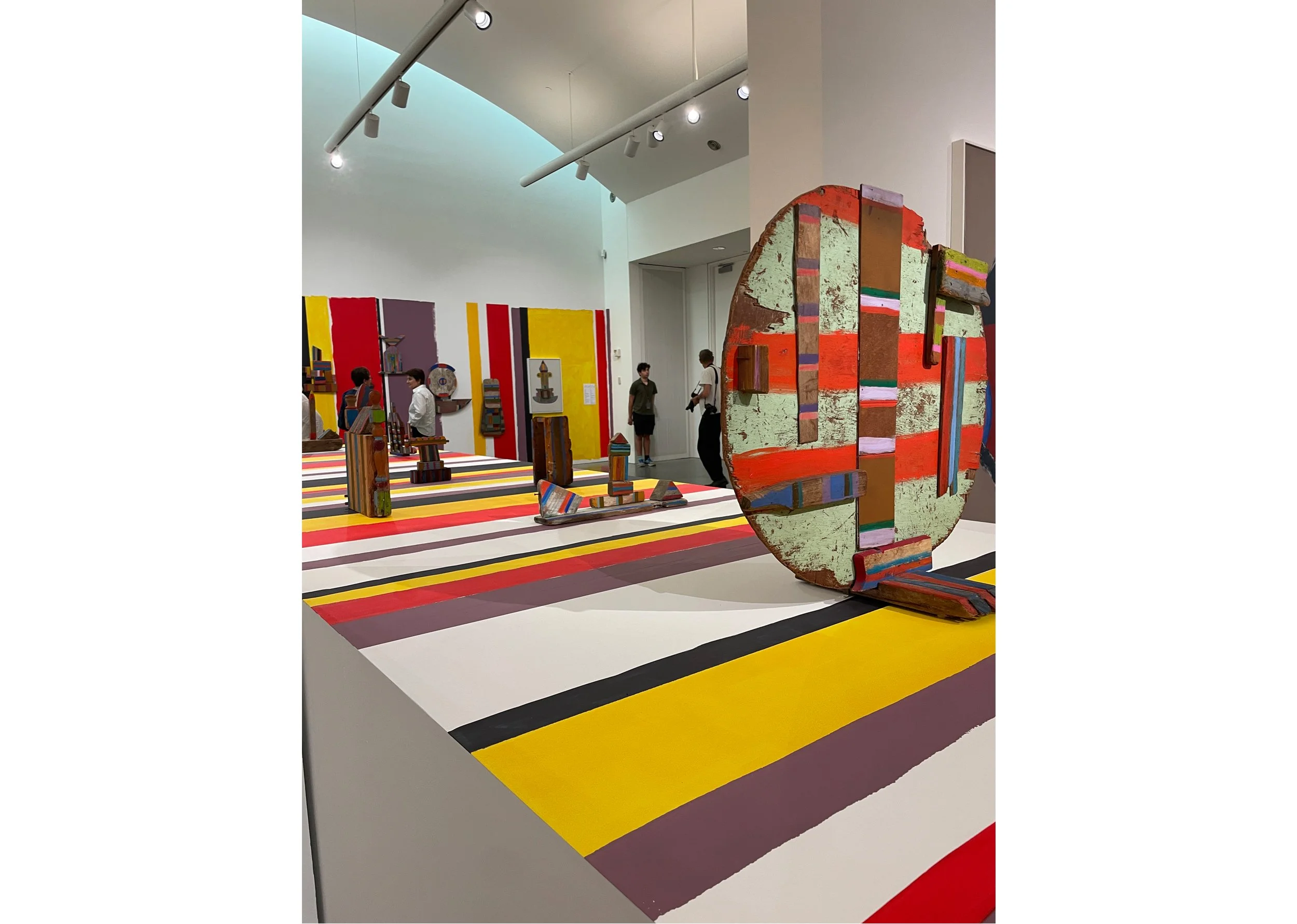
Installation view, Betty Parsons: An Expanded World, 2026, Hessel Museum, CCS Bard; photo James Yohe.
In later years, she explored more spare compositions of colorful stripes and irregular geometric shapes with a consistently assured touch and brilliant palette. Finally, she arrived at a form of hybrid painted-sculptures made of found wood, often in the form of playful wall reliefs, such as Moon (1982). A selection of these works is dazzlingly displayed against a wall with vibrant bands of color painted by Amy Sillman, who based her design on one of Parsons’s paintings that is also featured in the exhibition. The colorful repeated patterns and geometric and organic shapes that appear in Parsons’s work correspond gracefully with works by painter Uman in the exhibition Uman: In Between; and the weaver Marilou Schultz in the show Weaving Technology of Marilou Schultz, concurrently on view elsewhere in the Hessel Museum. —David Ebony
ANIMAL BODIES The Works of Elana Herzog, Jean Shin and Brigitta Varadi Athens Cultural Center on view Through August 16. '26.
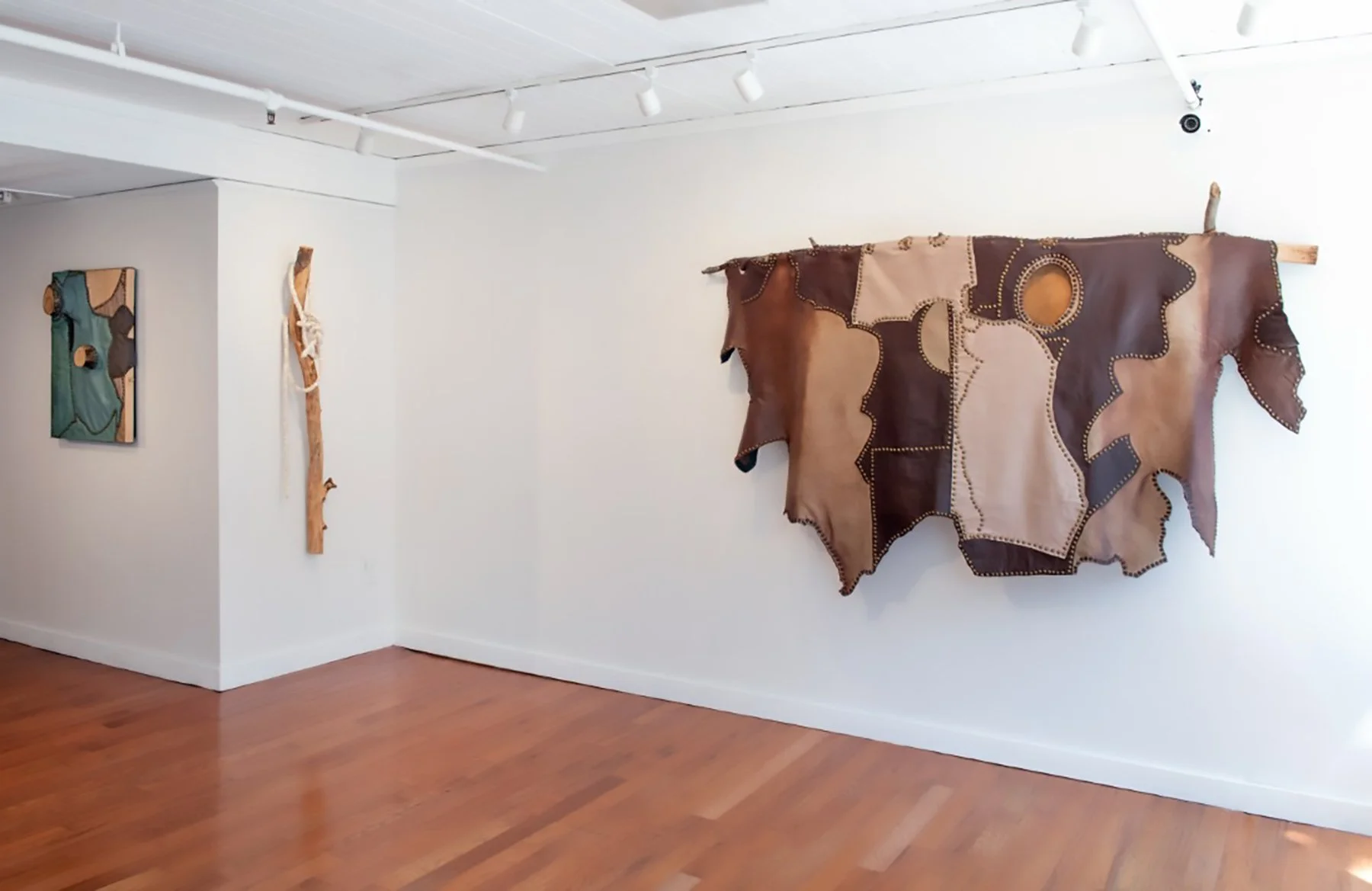
Installation view of Animal Bodies at the Athens Cultural Center, showing three works by Jean Shin: Courtesy Athens Cultural Center, Photography by Lynda Shenkman / Oxygen House
“The future is agrarian” has become a familiar refrain as artists and cultural workers leave cities and adopt homesteading lifestyles. In Animal Bodies, a three-artist exhibition deftly curated by Yasmeen Siddiqui of Minerva Projects, that cultural shift becomes the subject of inquiry. Bringing together three artists based wholly or partly in the Hudson Valley, the exhibition examines our relationship to the fleshy realities of animal life.
The title is productively ambiguous. “Bodies” may suggest slaughtered animals, but equally living ones. As hunting, meat production, and small-scale farming become increasingly visible to urban transplants, questions about humanity’s use of animals have grown more urgent. Siddiqui’s exhibition asks viewers to reconsider the ways humans depend upon animal lives for food, clothing, and labor while adapting to the rituals of life and death that agrarian existence entails. The show also extends the conversation to human animality and to the question of whether manufactured materials such as cloth can ever be separated from nature.
The artists approach these concerns from markedly different perspectives. Elena Herzog, who spends part of the year in Catskill, is known for wounding and dismantling fabrics to expose the layered “skins” that surround us. Hurley-based Jean Shin reframes familiar materials to reveal the histories embedded within them. Birgitta Varadi works most directly with agricultural communities, drawing on the realities of sheep farming and animal husbandry.

Elana Herzog, Noresund New York, 2017. Courtesy the artist and Athens Cultural Center
Shin’s Second Skin #1 (2025) originated in a commission from Olana. Researching the history of Frederic Church’s estate, she learned that Church was deeply troubled by the destruction of eastern hemlock forests, which were harvested for tannic acid used in leather production. In response, Shin juxtaposes animal hides with a branch from one of the trees Church planted, creating a poignant meditation on intertwined systems of extraction and stewardship.
Herzog’s work is less site-specific but equally archaeological. Drawing on fabrics gathered through years of travel, she uses the staple gun as both constructive and destructive tool, fastening, piercing, and unraveling textiles to reveal the cultural histories trapped within their fibers.
The exhibition’s most revelatory work may be Varadi’s Lorraine Brennan, Markings (2015). Researching a woman sheep farmer, Varadi focused on the painted symbols used to identify livestock. A large orange zero marks an infertile sheep destined for slaughter. Human societies often define gender through fertility; here we are reminded that, within commercial agriculture, infertility is a death sentence. Siddiqui asks us to consider how we will relate to animals ethically in an increasingly agrarian future, offering no easy answers. — Bill Arning
BECAUSE, NOW IS THE TIME OF MONSTERS at Wassaic Project, Wassaic, NY, through September 12, ‘26.
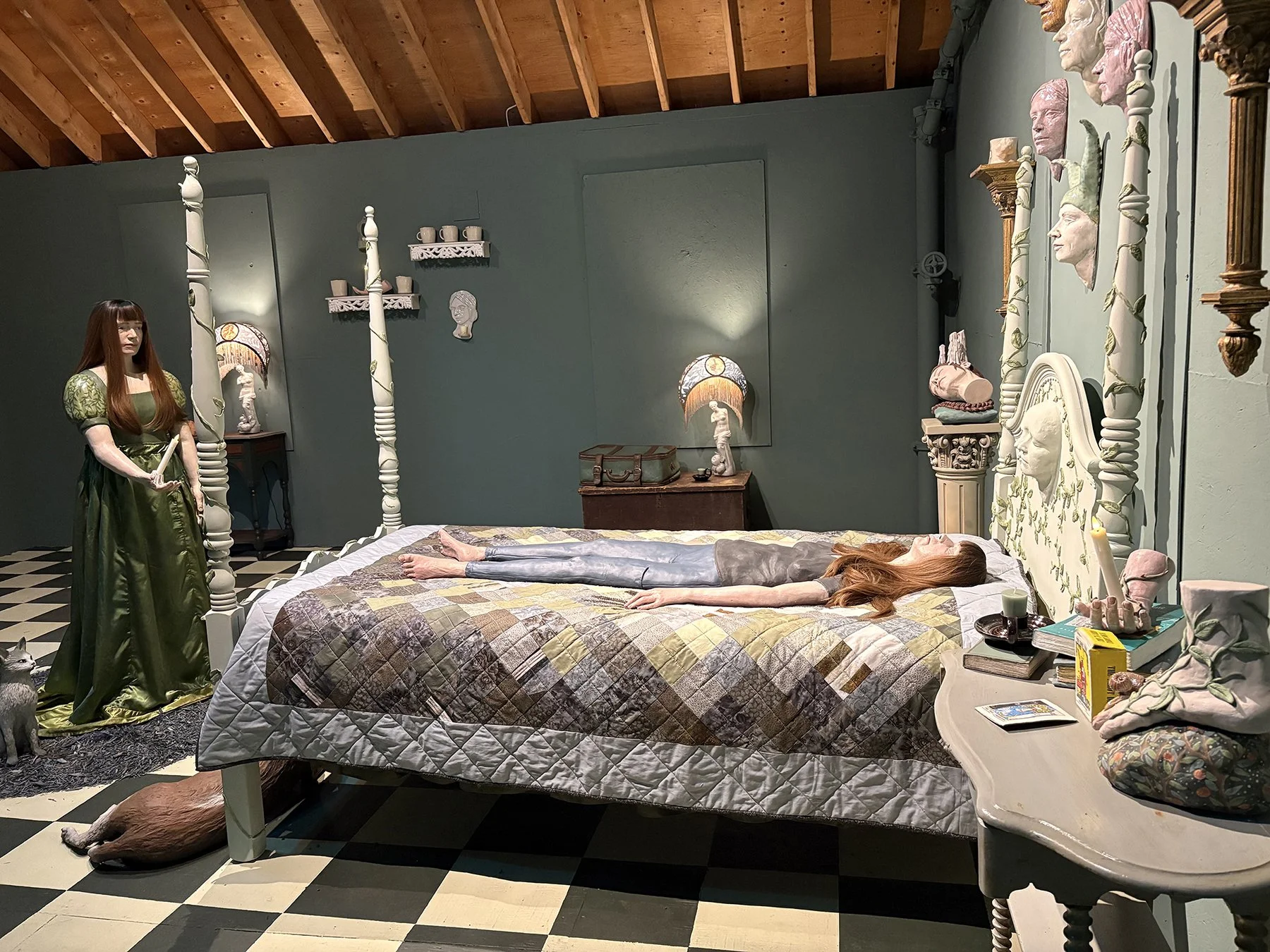
Installation view of Because, now is the time of monsters at Wassaic Project, showing Clarissa Pezone’s A Room of My Own, 2023 – 2026. Photo Taliesin Thomas.
The fun-loving team at the Wassaic Project mounts an annual summer show to excite, and this year they have gone all-out with one of their most compelling exhibitions yet. Featuring thirty-nine artists installed throughout the seven floors of the aged Maxon Mills building and the surrounding grounds, Because, now is the time of monsters is a marvelous art odyssey full of intrigue. With a title that references Antonio Gramsci’s Prison Notebooks (written between 1929-35 from a fascist Italian jail cell), his notion of a “space between a dying world and one not yet born” infuses this fantastical show with a dramatic ambiance that vacillates from entropy to abundance and back. The fun begins on the first floor with hand-carved basswood wall reliefs by Aaron Feltman, seductive paintings by Lisa Alonzo that both incorporate and look like stained-glass, and maquettes of dystopic urban areas by Dennis Gordon, including Nothing Is What We Thought (2022) to describe a decrepit building and its environs, a caption that aptly encapsulates the entire Because mood. Ace Lehner’s social practice performance installation Barbershop: The Art of Queer Failure (2019 – present) is its own room that sparkles with a queer-world-building attitude and features framed Polaroids of participants in the project, gold tinsel aplenty, and a classic barber chair ready for action. Also on the ground floor are neon-hued esoteric felt-fabric works by Davina Hsu and mixed-media denim portraits of beautiful Black folks by Vanessa Villarreal.
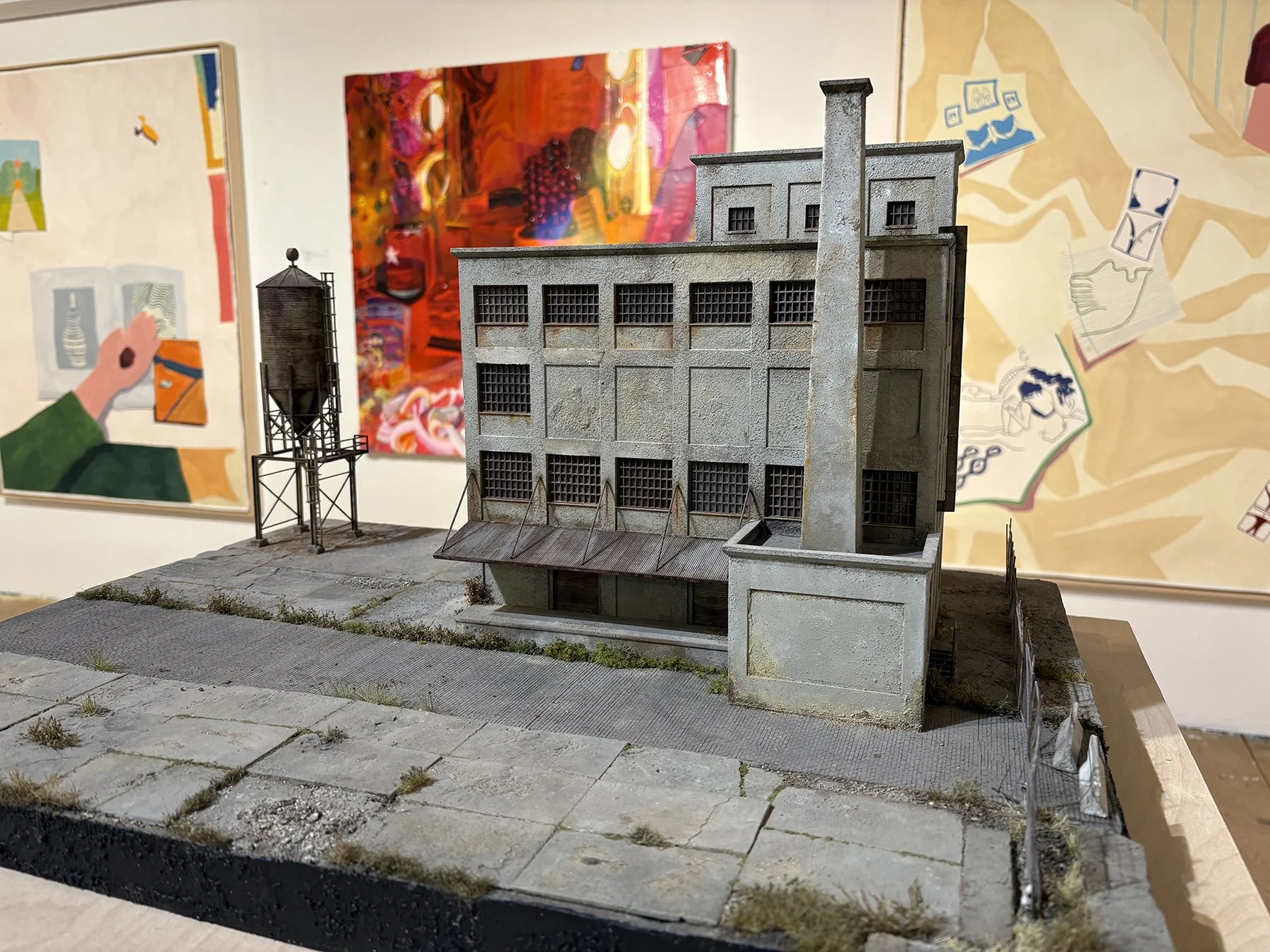
Installation view of Because, now is the time of monsters at the Wassaic Project. Dennis Gordon (front and center), Lisa Alonzo and Elise Dean Wolf (back) Photo Taliesin Thomas.
The succeeding floors are a bonanza of arty-weirdness and even the cubby spaces within the staircases serve as mini shows within the show, including hand-built clay sculptures of quotidian objects lathered in aerosol pigments by Kelly Cox (hazard cones never looked so cool) and ripe fluorescent acrylic fruits by Linye Jiang (the banana as enduring icon). Every section is a unique encounter with artworks that amplify the enigmatic time of monsters theme, and some of the other highlights include culturally questionable collages by Delano Dunn, robust esoteric vision-scapes by Michael Polakowski, a dreamy large-scale video animation by Laura Harrison and Lilli Carré, and Samuelle Green’s Origin Story 1 (2026) that fills half the room with reclaimed book pages rolled together to look like a mammoth hive. Other curious gems include Isys Hennigar’s gorgeous mutant-like glazed porcelain objects such as Sap Rising (2022), sumptuous tapestries by Amir Khadar, and wondrous mixed-media light boxes by Tim Olson, where each one tells its own enticing tale. The purple-hued space with Genevieve Cohn’s ethereal figure paintings glows with a cathedral-like energy, and the top floor installation featuring Clarissa Pezone’s A Room of My Own (2026) is the apex scene of this sensational show. In this hauntingly alluring spectacle, figurative sculptures, masks, and other objects made of earthenware create a mythological world with a psychological edge. If you only see one exhibition in the Hudson Valley this season, this is the one not to miss. –Taliesin Thomas
CARY LEIBOWITZ TOO PERSONAL STAY AWAY at Time & Space Limited, Hudson, NY, through July 26, ‘26.
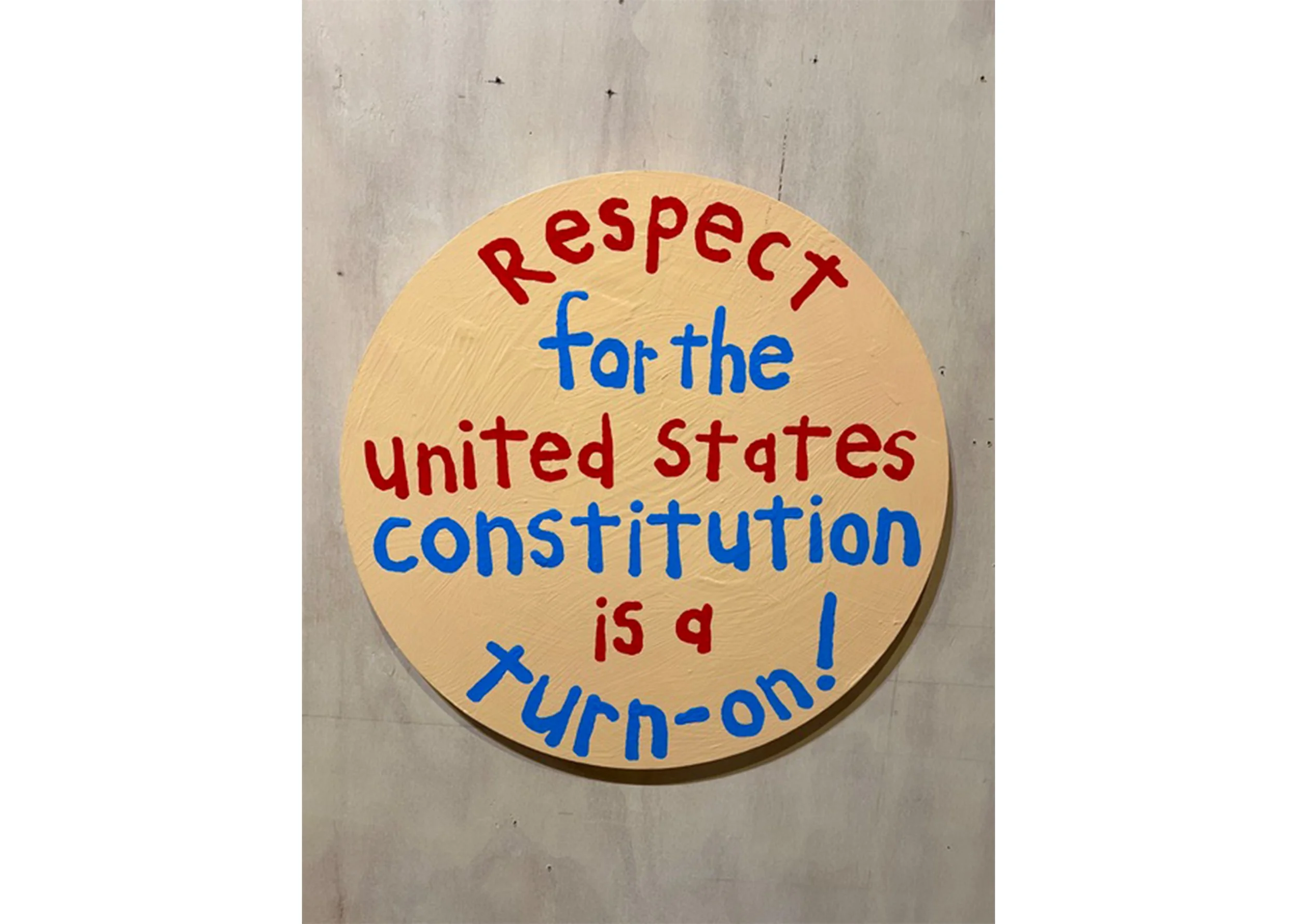
Cary Leibowitz. Respect for the U.S. Constitution 2018. Photo Bill Arning
Time & Space Limited has found a crucial niche within Hudson's crowded cultural landscape. This long-running venue invites renowned artists who have settled in the region to fill its cavernous exhibition hall. For art mavens, these exhibitions are celebrations of the extraordinary cultural migration that has transformed the visual arts upstate. At TSL, these established figures stretch out, take risks, and show what they can do with abundant space and a free curatorial hand. The exhibitions rarely disappoint, often revealing work that has been quietly waiting in storage. Now CandyAss Cary Leibowitz joins luminaries including Donna Moylan, Roberto Juarez, and David Becker in this series—a welcome addition.
Like a visual counterpart to the Borscht Belt comics who once held court in the nearby Catskills, Leibowitz's work is extravagantly funny and relentlessly self-deprecating, almost daring viewers to dismiss it. Yet his instantly recognizable imagery and embrace of inexpensive readymades make his work unusually accessible, even to audiences with little interest in contemporary art.
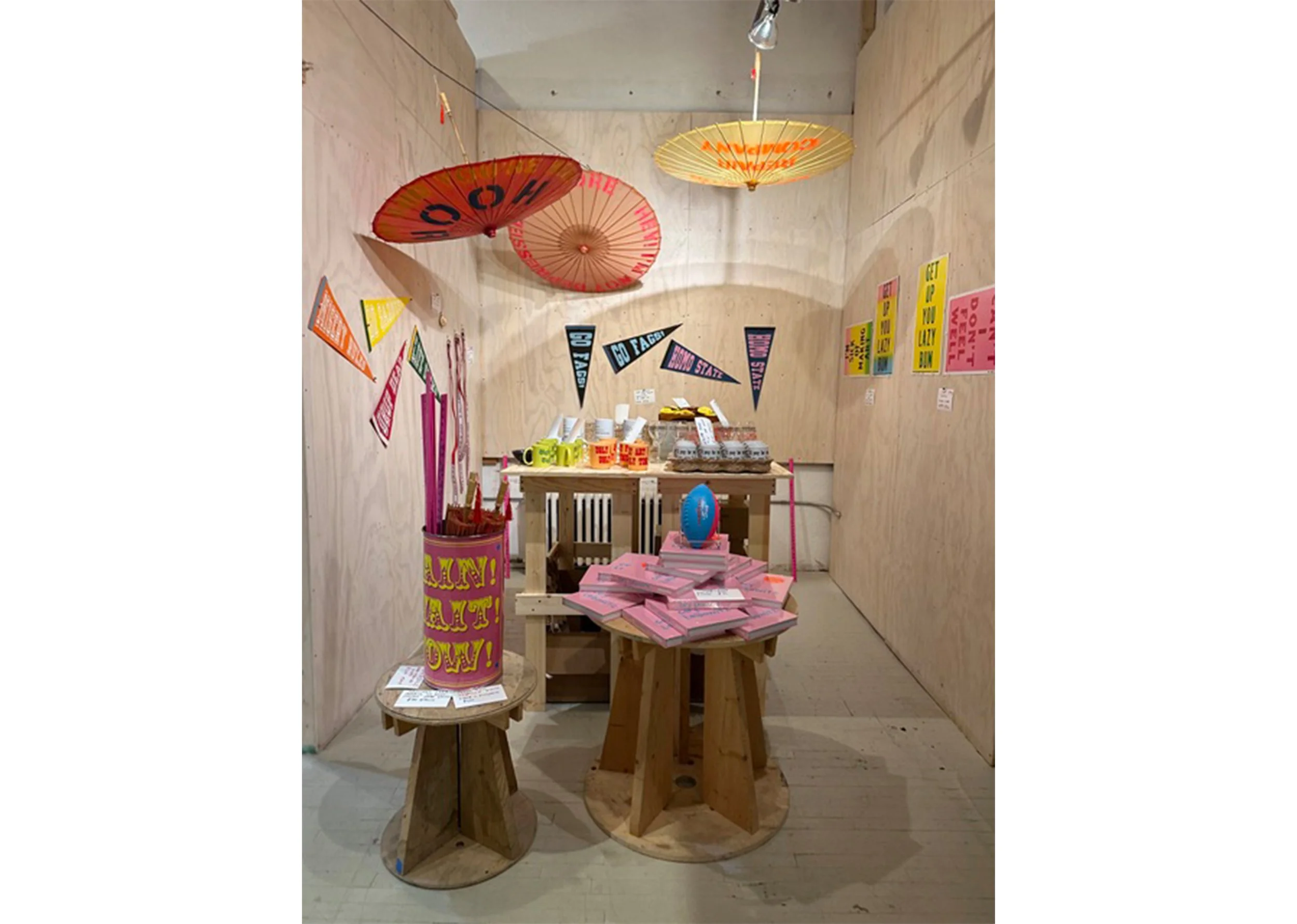
Cary Leibowitz Multiples, 2026, as installed in Cary Leibowitz: Too Personal Stay Away. Photo Bill Arning.
Leibowitz emerged fully formed. His 1991 CandyAss Carnival included team pennants emblazoned simply with "Go Fags," a perfect ACT UP-era rejoinder to respectability politics. The pennants still deliver a pleasurable jolt today at TSL. More than three decades later, his work remains defiantly political without becoming trapped in the dead ends of identity politics. His queerness and Jewishness are inseparable from his humor.
Leibowitz's 2018 retrospective, Museum Show, toured the country. While the TSL presentation is necessarily less comprehensive, it includes all of his signature forms. Although the exhibition reaches back to 1989, it emphasizes more recent work. Pieces made in response to Trump's first term remain depressingly relevant. The phrase "Respect for Democracy Is a Turn-On"—appearing here on wearable belts as well as paintings— feel even more urgent today.
His bratty text paintings gleefully undermine one another. One confidently proclaims, "I've Got Something Important to Say," while another sneers, "Your work is shit—you smell like shit." His recent shaped canvases, cut into ungainly silhouettes resembling oversized dog bones , carry the understated declaration, "Ugly Paintings for Ugly Times." Few contemporary artists communicate so directly while remaining so consistently funny. It is precisely the right combination for our anxious political moment. - Bill Arning