
Words Stephen Greco Photography Hilary Walsh
Published in No 21
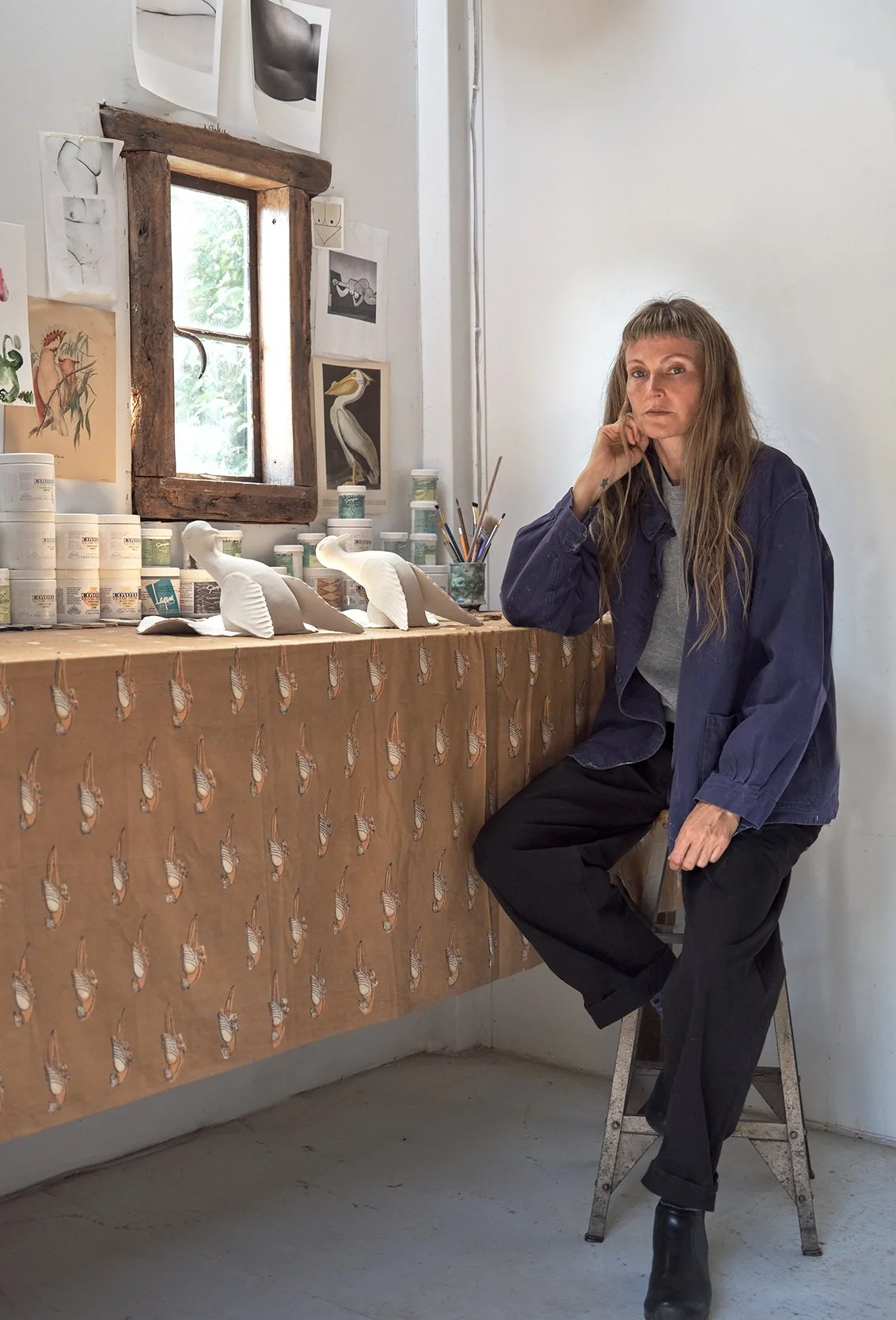
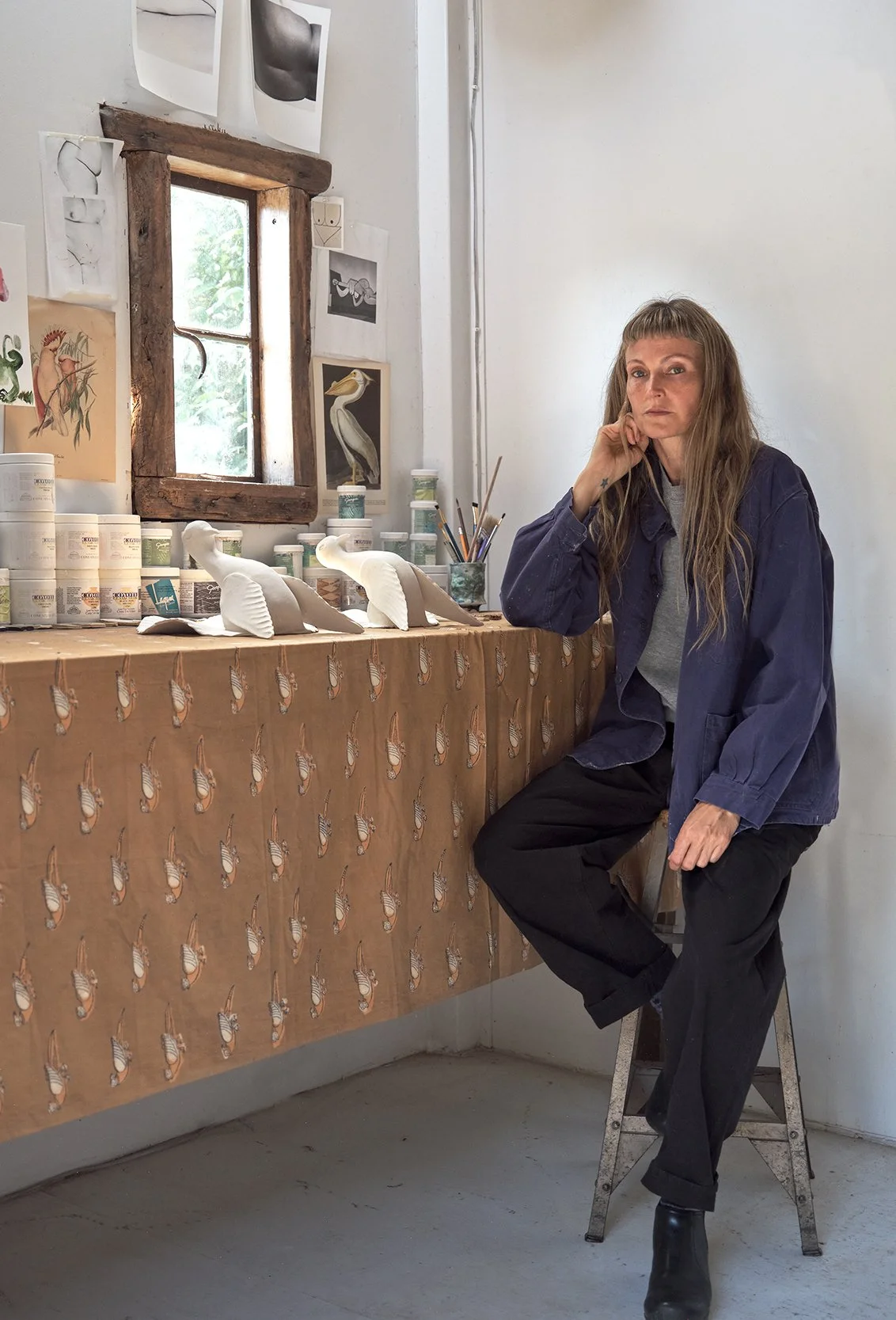
Walsh at her work bench next to Fan Tailed Pigeon sconce set, 2024, wearing vintage tops, and pants by Jesse Kamm.
When ceramicist Hilary Walsh moved her family out of Los Angeles and into a 1919 Spanish-style house in Ojai, she wasn’t chasing inspiration — just space. Specifically, space for a proper studio. But the move offered more than she expected: not just room to work, but a setting that began to help shape the work itself. "I wanted to feel inspired by the space," she says now, from the upstairs room of the guest house she gradually claimed as her own studio. "Not have to remodel to try to inspire myself."
The guest house is now a kind of gravitational center for her family, a sunlit structure with large windows and a courtyard, used by all four members for different parts of their lives. Her kids hang out in the enclosed carport, which doubles as a weight room and a social zone with a TV. Her husband commandeers the small bedroom for Zoom meetings. And Walsh has established a wide workbench, a kiln, and shelves that speak the language of clay. "There are times of day when the whole family is here, and the main house is empty," she laughs. "It’s just where we all want to be."
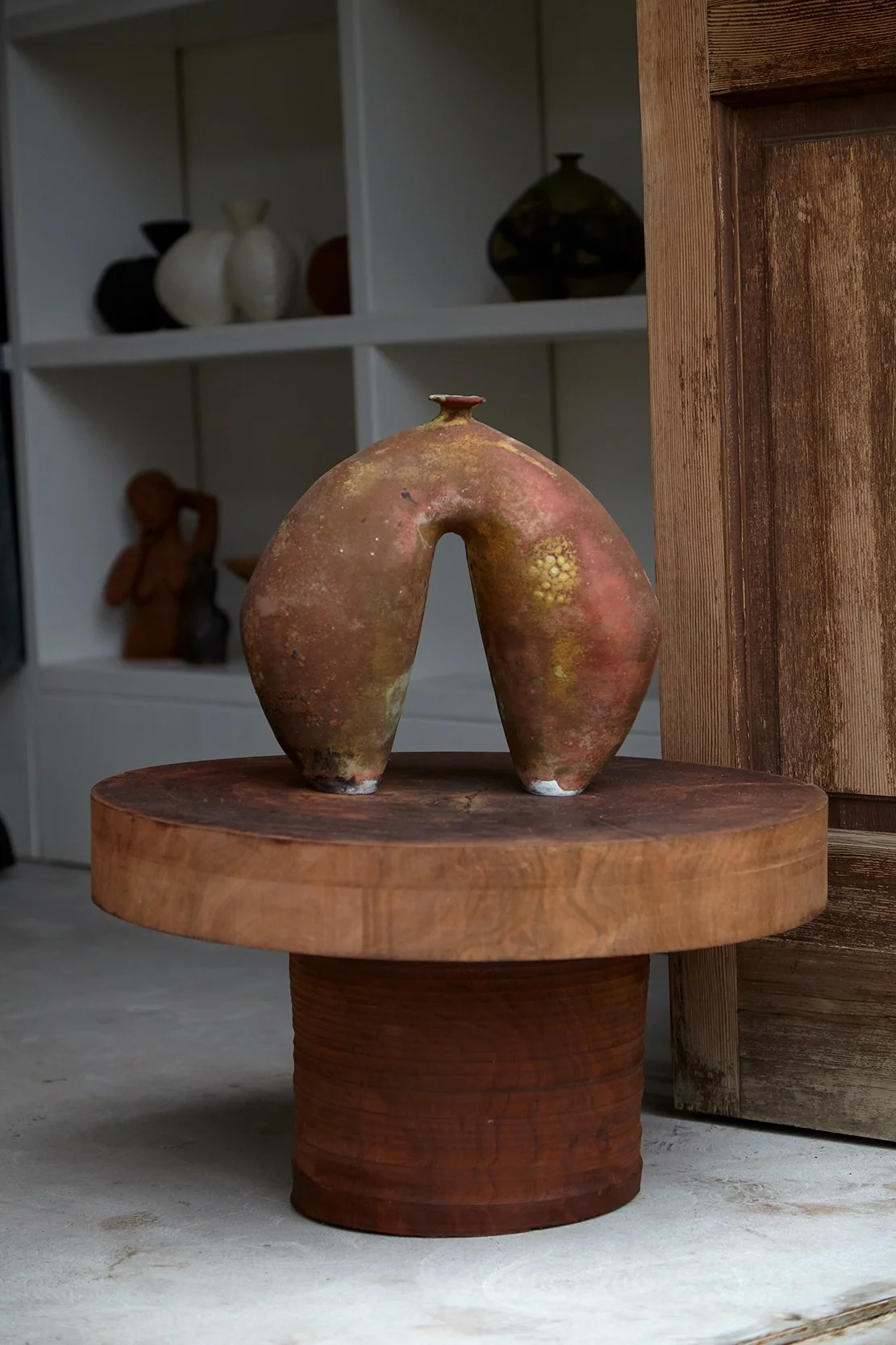
Hairpin Vessel 12, in rusty black velvet texture.This
Modest and funny, Walsh is quick to deflect any suggestion that the house or its interiors should themselves be the subject of a profile. "I didn’t build the house," she insists. "I’m not an interior designer. And my husband — he really doesn’t like this kind of attention." But as she speaks, it becomes clear that the house is more than a backdrop. It is a collaborator. The thick old walls, the cool shadows, the oak trees that dominate the property’s acre of land: all of it forms the quiet envelope around Walsh’s work.
Before she was a ceramicist, Walsh spent twenty-three years as a professional photographer. Photography, she says, was a pragmatic choice — a compromise between her creative instincts and the need to make a living. "I had no money when I graduated," she explains. "I wanted to go to art school, but my parents said no. So, I found photography as this in-between where I could be creative and also have a career." She became successful in that world. But something deeper went unsatisfied. "It wasn’t scratching the itch."
That itch turned out to be a lifelong impulse toward making things. Her mother was a fiber artist who dyed and wove her own yarn, and Walsh grew up immersed in textiles and indigenous craft traditions — Andean, Indonesian, and Native American forms. "I was an only child who sat in a basement making things," she says with a wry grin. "Always making things."
The influence of her mother goes beyond early exposure, explains Walsh. It established a tactile and ethical orientation toward materials. Her mother didn't just use yarn; she dyed it herself, often working with plant-based or traditional dyes. She was drawn to the processes of older cultures and even completed a residency in Peru to study indigenous fiber practices. Their house was filled with handwoven Peruvian rugs, ikats from Indonesia, and tools for carding, dyeing, and weaving. Walsh absorbed that sense of reverence for materiality and origin. Years later, when she and her husband acquired a few alpacas on their Ojai property, it was partly in homage to that maternal lineage. "We thought it would be fun to shear them and spin our own yarn," she says. The gesture wasn’t performative; it was inherited.

By the front entrance, an olive tree.
Her switch to clay wasn’t abrupt. She began working with it fifteen years ago, around the edges of her photography life. What drew her wasn’t the potter’s wheel, but the quiet, slow process of hand-building — a labor-intensive, tactile approach that, like weaving, accrues from one small movement at a time. She started taking night classes. She processed her own clay. And eventually, when the move to Ojai gave her a studio and more space, the shift became permanent. Photography fell away.
"I love a process," she says. "Even in photography, I loved processing my own film. Getting lost in that space, that flow state. Clay offers the same thing, but more grounding." The material has also become a kind of ethical partner. Walsh is uneasy about consumption, waste, and the endless creation of decorative objects destined for eventual disposal. Clay offers something else: renewal. "Objects of clay eventually just break down again, turn back into dirt."
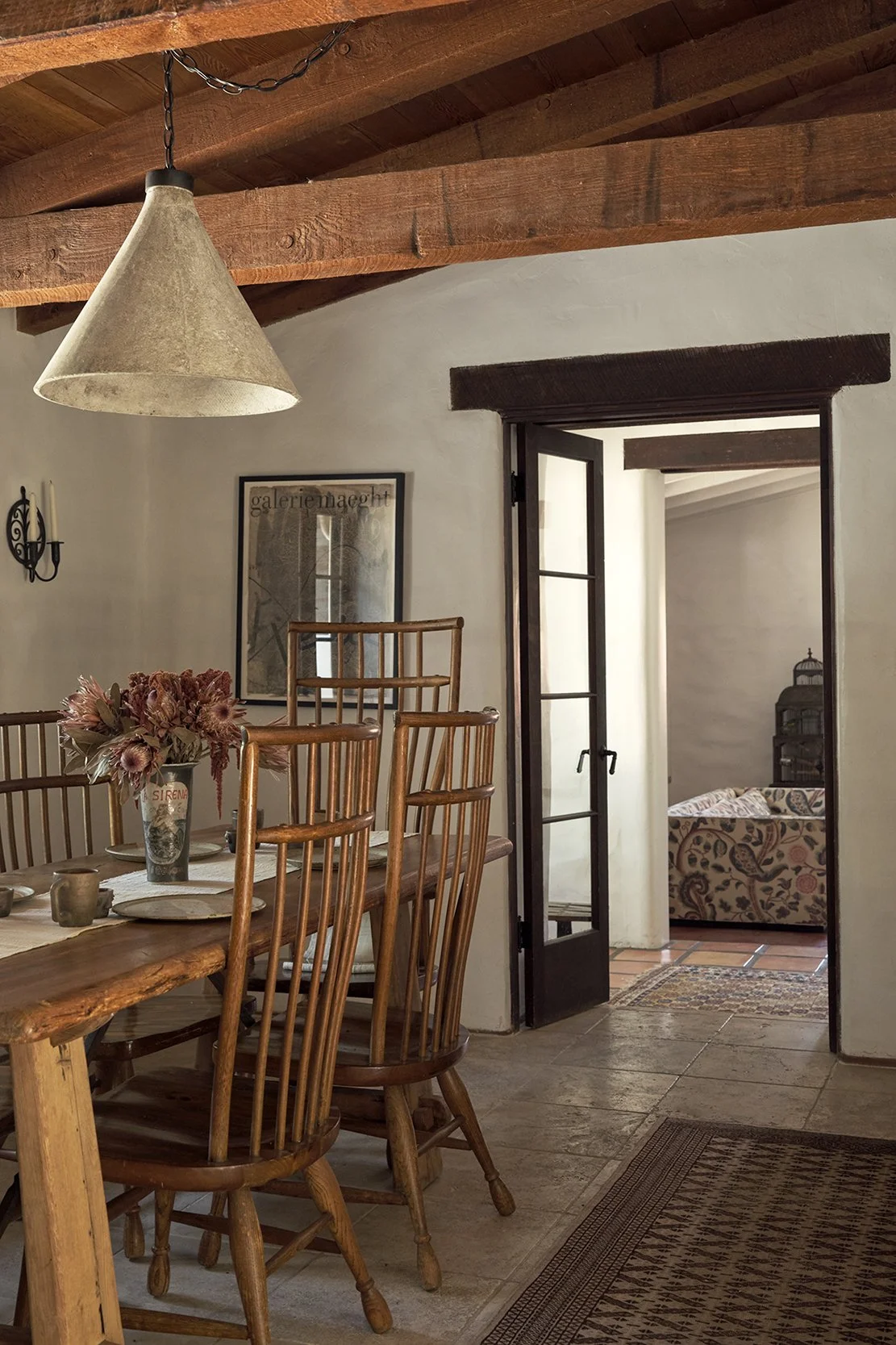
The Dining room.
That connection deepened during a workshop at Penland School of Craft in North Carolina, where she and others dug their own so-called “wild clay” and wood-fired it on-site. "That was a moment," she says. "It felt like it brought all parts of me together." Go deeper in issue 21.
Stephen Greco’s most recent books are Such Good Friends, a novel of Truman Capote and Lee Radziwill, and The Last American Heiresses, a novel of Doris Duke and Barbara Hutton.